Skip to Content
chevron-left chevron-right chevron-up chevron-right chevron-left arrow-back star phone quote checkbox-checked search wrench info shield play connection mobile coin-dollar spoon-knife ticket pushpin location gift fire feed bubbles home heart calendar price-tag credit-card clock envelop facebook instagram twitter youtube pinterest yelp google reddit linkedin envelope bbb pinterest homeadvisor angies

2026 Top Shearing Machine Manufacturers How to Choose?

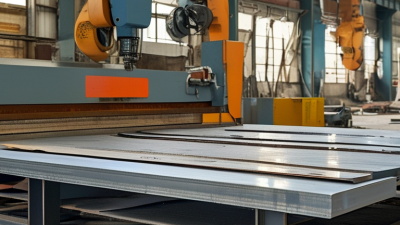
Choosing among the 2026 top shearing machine manufacturers requires more than comparing prices or polished websites. A reliable decision starts with the material, thickness range, cutting length, and daily production rhythm. Mild steel, stainless steel, and aluminum can produce different results under the same machine settings. A practical review should examine test cuts, edge straightness, burr formation, blade life, and back-gauge accuracy. Small details matter. A rough edge can become an expensive problem during bending or welding.

Manufacturer reputation remains important, but reputation alone is not proof. Check documented machine specifications, factory experience, customer references, warranty terms, training, and spare-parts availability. Ask whether service engineers can support installation in your region. Inspect the control system, hydraulic components, safety features, and frame construction. Independent inspection records and clear compliance documentation also deserve attention. Some suppliers publish impressive accuracy figures without explaining testing conditions. That weakness should not be ignored.

No ranking is perfect. A recognized brand may not suit every workshop, while a smaller manufacturer may offer stronger support. The best shearing machine depends on real workloads, operator skill, maintenance capacity, and long-term costs. Compare power consumption, blade replacement frequency, downtime risks, and software usability. Request a cutting demonstration using your actual sheet material. Watch the operator adjust the blade gap. Listen for unusual vibration. Then review the quotation carefully, including shipping, commissioning, training, and service response times. A careful choice may take longer, but it can protect production quality for years.
2026 Top Shearing Machine Manufacturers How to Choose?

What Is a Shearing Machine and How Does It Work?

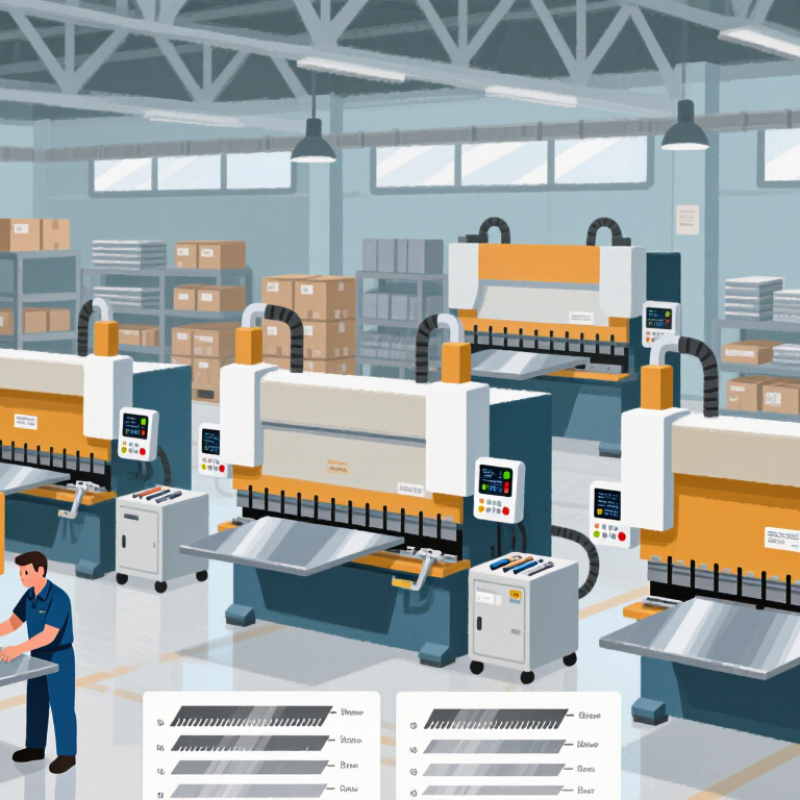
A shearing machine cuts sheet metal by applying controlled force between two blades. Unlike a saw, it usually removes very little material. The upper blade moves downward, while the lower blade supports the sheet. Pressure creates a clean separation along the cutting line.

Many machines use hydraulic cylinders, although mechanical systems remain common for lighter work. The operator adjusts blade clearance according to material thickness and strength. If the gap is too narrow, edges may deform and blades can wear quickly. If it is too wide, the cut may show burrs or twisting. Small settings matter.

In daily production, the back gauge positions each sheet before cutting. A foot pedal or control panel then activates the stroke. Operators should check the blade condition, hold-down pressure, and emergency stops before use. I have found that accurate measurements do not always produce perfect cuts. Material flatness, temperature, and operator habits can interfere. That is easy to overlook.

When comparing shearing machine manufacturers, inspect documentation, safety systems, service response, and replacement-part availability. Ask for cutting samples using your actual steel grade and thickness. A polished demonstration can hide practical weaknesses. Reliable manufacturers explain maintenance intervals clearly and provide measurable accuracy data. Photographs alone are not enough.

2026 Top Shearing Machine Manufacturers: How to Choose?

What Is a Shearing Machine and How Does It Work?

A shearing machine cuts sheet metal by applying opposing forces through upper and lower blades, producing a straight cut without generating chips. The chart shows representative industry working ranges for mild-steel thickness by machine type. Actual capacity depends on material strength, blade gap, cutting length, blade condition, and machine configuration.

Key Types of Shearing Machines and Their Industrial Uses

Choosing a shearing machine starts with understanding the cut, not the catalog. Guillotine shears suit straight, accurate cuts on medium and thick metal sheets. Swing-beam shears work well for general fabrication and repeated workshop jobs. Mechanical shears offer fast cycling for high-volume production. Hydraulic shears provide adjustable force and stable performance when material thickness changes.

Industrial use defines the right machine. Sheet-metal workshops often process mild steel, stainless steel, or aluminum panels. Construction suppliers may need long cutting lengths for roofing and structural components. Appliance factories usually value clean edges and repeatable dimensions. For delicate materials, blade clearance and pressure-foot control deserve close inspection. Poor adjustment can leave burrs along the cut edge.

Choose capacity with measured evidence. Check maximum thickness, cutting length, stroke rate, accuracy, and duty cycle. Ask for sample cuts using your actual material. Watch the cut surface, noise level, and sheet movement. Safety guarding, emergency stops, and accessible maintenance points are essential. Operator training matters too. More power is not always better. It can increase energy use and damage thin sheets. A cheaper machine may appear efficient, but that judgment is often incomplete. Consider blade life, calibration stability, spare parts, and service response. In practical evaluations, small alignment errors often become expensive production problems. The machine should fit the work, not merely impress the buyer.

2026 Top Shearing Machine Manufacturers: How to Choose? — Key Types of Shearing Machines and Their Industrial Uses

Machine Type Operating Principle Typical Cutting Capacity Typical Cutting Length Recommended Materials Cutting Accuracy Main Industrial Uses Key Selection Factors
Hydraulic Guillotine Shear A hydraulically driven upper blade moves vertically against a fixed lower blade. Blade clearance and rake angle can normally be adjusted for different materials. Approximately 6–25 mm mild steel; 3–12 mm stainless steel, depending on machine size and material strength. Approximately 2,000–8,000 mm per cut. Mild steel Stainless steel Aluminum Galvanized sheet Typically about ±0.1–0.5 mm under suitable setup and material conditions. Heavy plate preparation, structural steel, shipbuilding, pressure-vessel fabrication, construction equipment, and general metal service centers. Maximum thickness, cutting length, hydraulic power, backgauge travel, blade material, throat depth, and whether long plates require front or sheet-support systems.
Hydraulic Swing-Beam Shear The upper beam pivots around a fixed axis while the top blade swings through the workpiece. It is commonly controlled by hydraulic cylinders. Approximately 4–16 mm mild steel; 2–8 mm stainless steel. Approximately 2,000–6,000 mm per cut. Carbon steel Stainless steel Aluminum Copper alloys Typically about ±0.1–0.5 mm, influenced by blade condition, clearance, and backgauge performance. Sheet-metal workshops, HVAC duct production, electrical cabinets, architectural metalwork, and medium-duty fabrication. Required sheet thickness, production volume, minimum cut size, backgauge repeatability, blade rotation options, and ease of maintenance.
Mechanical Guillotine Shear An electric motor and flywheel transfer energy to a crank or eccentric mechanism that drives the upper blade. Approximately 1.5–6 mm mild steel; 1–3 mm stainless steel. Approximately 1,000–3,200 mm per cut. Thin carbon steel Aluminum Brass Galvanized sheet Typically about ±0.1–0.3 mm with a properly adjusted backgauge and sharp blades. High-volume sheet processing, appliance components, light fabrication, ductwork, and small-to-medium metal workshops. Required stroke rate, sheet thickness, energy consumption, noise level, maintenance requirements, and availability of mechanical parts.
Pneumatic Shearing Machine Compressed air powers the cutting actuator, usually through a pneumatic cylinder or air-assisted mechanism. Commonly up to 1–3 mm mild steel or non-ferrous sheet, depending on blade length and air pressure. Approximately 300–1,500 mm per cut. Thin sheet Aluminum Plastic sheet Light-gauge steel Typically about ±0.2–0.5 mm in short-cut applications. Electronics enclosures, HVAC components, signage, light-gauge fabrication, and areas requiring low hydraulic contamination risk. Available air pressure and flow, blade length, cutting frequency, noise control, safety guarding, and the plant’s compressed-air capacity.
Alligator Shear A hinged upper blade closes against a fixed lower blade, producing an intermittent shearing action. The material is usually positioned manually. Approximately 6–25 mm round or flat stock; larger models can process heavier sections and scrap bundles. Usually 100–600 mm per stroke or bite. Steel bar Flat bar Rebar Copper cable Scrap metal Generally suited to rough sizing rather than precision cutting; accuracy is commonly around ±1–3 mm. Scrap recycling, foundries, metal recovery yards, demolition processing, and preparation of bars for secondary operations. Maximum section size, cutting force, jaw opening, cycle rate, material handling method, blade accessibility, and operator safety features.
Rotary or Circle Shear One or more circular blades rotate continuously and cut the sheet along a straight, curved, or circular path. Commonly about 0.3–3 mm sheet, with specialized models handling thicker material. Continuous cutting; practical width depends on throat, guide, and workpiece geometry. Aluminum Thin steel Stainless sheet Copper Typically about ±0.2–0.8 mm, depending on guide control, blade condition, and operator skill. Round blanks, tanks, duct transitions, ventilation components, roofing parts, and circular sheet-metal fabrication. Required cutting profile, sheet thickness, minimum radius, blade diameter, edge quality, material feeding method, and repeatability.
CNC Programmable Shear A numerical-control system manages the backgauge, stroke sequence, cutting parameters, and repeat jobs for automated production. Approximately 4–16 mm mild steel for many standard production models; capacity varies widely by design. Approximately 2,000–6,000 mm per cut. Mild steel Stainless steel Aluminum Pre-painted sheet Typically about ±0.1–0.3 mm for repeat positioning when the machine is correctly calibrated. Automotive components, contract fabrication, electrical equipment, appliance manufacturing, and batch production with frequent job changes. Control-axis count, program memory, backgauge speed, material handling, nesting or ERP connectivity, operator interface, and service support.
NC or CNC Fiber-Laser Shear Alternative Although not a conventional blade shear, a focused laser beam separates sheet without direct blade contact and can process programmed contours. Approximately 0.5–25 mm mild steel; capacity depends on laser power, material grade, and cutting speed. Common sheet formats include approximately 1,500 × 3,000 mm and larger. Carbon steel Stainless steel Aluminum Brass Often about ±0.05–0.15 mm positioning accuracy on suitable systems; actual part tolerance depends on process conditions. Complex profiles, precision enclosures, automotive parts, machinery components, signage, and low-to-medium volume custom work. Laser power, material thickness, assist gas, cutting speed, bed size, software compatibility, operating cost, and the need for non-linear profiles.

Note: The figures shown are typical industry ranges for equipment selection, not guaranteed specifications for every machine. Actual performance depends on material tensile strength, blade clearance, blade condition, machine configuration, workpiece support, and calibration.

How to Evaluate Shearing Machine Manufacturers in 2026

2026 Top Shearing Machine Manufacturers: How to Choose?

How to Evaluate Shearing Machine Manufacturers in 2026

A reliable evaluation starts with production evidence, not polished brochures. The World Steel Association reported 1.88 billion tonnes of crude steel production in 2024. That scale demands stable cutting accuracy and strong machine availability. Ask manufacturers for cutting tests using your actual material, thickness, and blade clearance. Check burr height, angle consistency, cycle time, and scrap levels. One impressive sample proves little.

Automation is also changing supplier expectations. The International Federation of Robotics recorded 541,302 industrial robot installations in 2023. A modern shearing machine should support practical communication, fault records, and safe integration. Review electrical drawings, software support, spare-parts lead times, and operator training. The ISO Survey 2023 recorded more than one million ISO 9001 certificates worldwide. Certification helps, but it does not replace an audited factory visit or customer references. I would still question unusually perfect data. Real factories have delays, rework, and occasional mistakes.

Tips: Request a witnessed factory acceptance test. Compare three years of maintenance records. Inspect welds, guards, hydraulic fittings, and emergency stops. Ask for written accuracy limits under continuous operation. Confirm whether service engineers are available in your region. Also calculate lifetime cost, including blades, energy, downtime, and calibration. A cheaper quotation may become expensive after the first alignment problem.

Essential Factors for Comparing Quality, Cost, and Service

When comparing shearing machine manufacturers in 2026, quality should begin with measurable evidence.

The World Steel Association reported 1.89 billion tonnes of crude steel production in 2023. That volume demands stable cutting accuracy, not attractive brochures. Ask for blade-life records, repeatability tests, frame deflection data, and inspection certificates. Request a live cutting trial using your actual material thickness. A clean edge at the factory proves little if calibration changes after installation.

Cost requires a wider calculation. Include tooling, electricity, maintenance, training, downtime, and scrap. Price is not value. A low quotation may hide expensive replacement blades or slow technical support. The International Federation of Robotics recorded 541,302 industrial robot installations in 2023, showing how quickly factories are adopting connected automation. Check whether the machine supports data access, fault alerts, and future integration. Yet automation is not automatically economical. For smaller workshops, a simpler control system may reduce repair risk.

Service often separates a reliable supplier from a temporary seller. Compare response times, spare-parts availability, remote diagnosis, and technician coverage in your region. Ask for written warranty limits and service records from comparable installations. Speak with operating customers, not only sales staff. I would also question impressive promises. They may be optimistic. A practical scorecard can rank accuracy, total ownership cost, training, and support separately. Leave room for uncertainty; real production rarely matches a perfect demonstration.

How to Choose the Right Shearing Machine Manufacturer for Your Needs

Choosing the right shearing machine manufacturer starts with your actual cutting work, not a glossy catalog. Define material grade, thickness, sheet width, daily cycles, tolerance, and loading method. The World Steel Association reported about 1.89 billion tonnes of crude steel production in 2023. That scale shows the market’s demand, but it does not prove machine quality.

Ask manufacturers for documented test results using your material. Check cut-edge squareness, burr height, repeatability, blade life, and cycle time. A serious supplier should explain frame rigidity, hydraulic stability, controller functions, and guarding against ISO 12100 principles. Request customer references with similar plate sizes. A short factory visit can reveal more than polished videos.

Automation capability also deserves attention. The International Federation of Robotics recorded 541,302 industrial robots installed worldwide in 2023, according to World Robotics 2024. Your supplier should support safe integration with loaders, conveyors, and production software. Confirm spare-parts availability, remote diagnostics, technician response time, training, and warranty exclusions in writing. Do not judge service by promises alone. Ask for a sample response procedure.

Price still matters. It is not the whole decision. A cheaper machine may bring unstable cuts, longer setup time, or expensive downtime. Yet premium specifications can also exceed your needs. Build a three-year cost model, then challenge its assumptions. Small omissions often become large invoices.