China Top 10 Shearing Machine Manufacturers
Choosing a reliable shearing machine manufacturer requires more than comparing prices or browsing polished websites. This guide examines China’s top 10 shearing machine manufacturers through practical, buyer-focused criteria. The review considers manufacturing experience, engineering capability, product range, quality control, certifications, service support, and export performance. It also looks at how each company handles real workshop demands, from cutting mild steel sheets to managing repeat production with tight tolerances.
Details matter. A machine may appear impressive in photographs, yet its frame rigidity, blade adjustment, hydraulic stability, and control system decide daily performance. Reliable manufacturers usually provide clear technical specifications, installation guidance, maintenance instructions, and responsive after-sales support. Customer feedback, factory experience, and documented testing can reveal more than promotional claims. Where available, this overview considers production scale, customization capacity, delivery practices, and the company’s ability to support international buyers.
No ranking is flawless. Manufacturer information can change, and some performance data remains difficult to verify independently. Buyers should confirm specifications, inspect sample cuts, request references, and discuss warranty terms before ordering. A lower initial price may create higher costs through downtime, replacement blades, or limited technical assistance. That risk deserves attention. This article is designed as a practical starting point, not a substitute for careful due diligence. By comparing these ten companies consistently, readers can better identify a shearing machine supplier that fits their material, production volume, budget, and long-term service expectations.
Shearing Machine Manufacturing in China: Industry Overview
China Top 10 Shearing Machine Manufacturers
Shearing Machine Manufacturing in China: Industry Overview
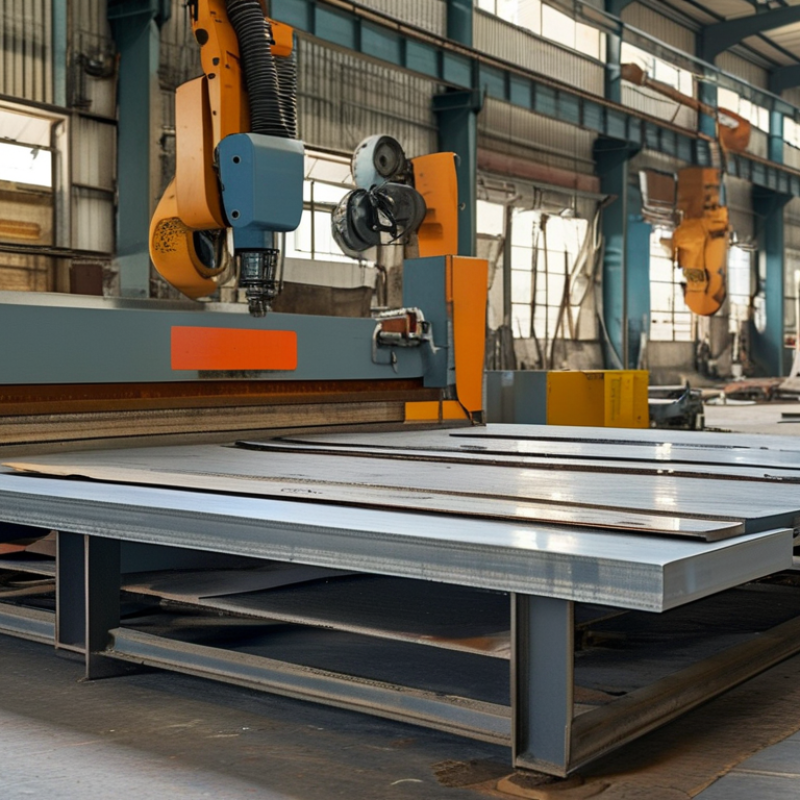
China’s shearing machine industry has grown around strong metalworking, casting, and automation supply chains. Manufacturers produce mechanical, hydraulic, and CNC shearing machines for steel service centers, fabrication shops, and industrial plants. Production clusters often provide nearby access to motors, hydraulic valves, controllers, and precision-machined parts.
A top-ten comparison should examine more than factory size. Practical experience matters. Engineers usually review cutting length, thickness capacity, blade clearance, back gauge accuracy, and frame stability. A machine cutting 6-millimeter mild steel may perform differently on stainless steel. That detail is easy to miss. Buyers should request test videos, sample cuts, inspection records, and clear tolerance data.
Quality control commonly includes frame welding checks, hydraulic pressure testing, electrical inspections, and trial operation before shipment. Export-focused factories may also support installation guidance, spare parts, operator training, and documentation for international markets. However, not every polished showroom reflects consistent production quality. Some suppliers still rely heavily on manual adjustment, which can affect repeatability over time. A careful audit should compare the advertised configuration with the actual machine on the workshop floor. Independent inspection is useful, especially for customized models. Price remains important, but service response, component availability, and long-term maintenance often determine the real operating cost.
How to Evaluate China’s Top Shearing Machine Manufacturers
A strong ranking should begin with evidence, not factory photos. The 2023 ISO Survey reported more than 1.26 million ISO 9001 certificates worldwide. However, certification alone does not prove cutting quality. Ask for calibration records, material traceability, and recent inspection data. A serious manufacturer should show stable results on mild steel, stainless steel, and different thicknesses.
Test the machine before purchasing. Check cut-edge squareness, burr height, repeatability, and backgauge positioning. Use the same plate specification for every supplier. This makes comparisons fair.
The International Federation of Robotics reported 276,288 industrial robot installations in China during 2023. That figure reflects strong automation demand, but automation does not replace engineering judgment. Watch the machine cycle. Listen for abnormal vibration. Inspect welds, hydraulic connections, guards, and electrical cabinets.
Service capability matters just as much as capacity. Request spare-parts lead times, remote support procedures, and technician response records. China Machine Tool Industry Association reports can help verify market experience, while third-party factory audits reveal more practical details.
Do not trust only a polished demonstration. One test cut can hide poor long-term stability. My own evaluation approach would require repeated cuts after thermal loading, yet many buyers skip this step. That is a mistake worth correcting.
Profiles of the Top 10 Chinese Shearing Machine Manufacturers
China’s top ten shearing machine manufacturers reflect a broad, export-oriented production base. Industry reports from Grand View Research place the global metal cutting machine market in sustained growth, supported by automotive, construction, and fabricated metal demand. Reports from the China Machine Tool Industry Association also show continuing investment in CNC equipment and factory automation.
The first group specializes in hydraulic guillotine shears for thick carbon steel plates. Their machines often use welded frames, adjustable rake angles, and protected hydraulic systems. Another group focuses on CNC swing-beam models for workshops needing faster setup. Several manufacturers combine shearing, bending, and laser equipment in one production portfolio. This helps buyers reduce supplier coordination. It can also make technical support less consistent.
Some leading profiles emphasize heavy-duty machines for shipyards and structural steel plants. Others target compact units for appliance and sheet-metal factories. Typical specifications include cutting lengths from 1,300 to 6,000 millimeters and capacities from thin sheet to more than 20 millimeters. Exact performance depends on material hardness, blade clearance, and maintenance quality.
Export experience is another key differentiator. Established producers usually provide CE-related documentation, factory testing records, installation guidance, and spare-blade support. Yet certificates alone prove little. Buyers should inspect test cuts, frame alignment, control-system stability, and after-sales response times. Published market data gives useful direction, but it cannot replace an on-site audit. Some supplier profiles appear impressive until real production samples reveal slower cycles or uneven cuts.
China Top 10 Shearing Machine Manufacturers - Profiles of the Top 10 Chinese Shearing Machine Manufacturers
| Rank | Anonymous Manufacturer Profile | Primary Product Focus | Typical Cutting Length | Typical Mild-Steel Capacity | Control Configuration | Back-Gauge System | Drive and Frame Design | Common Applications | Typical Export Positioning |
|---|---|---|---|---|---|---|---|---|---|
| 1 | Profile A | Heavy-duty hydraulic guillotine shears | 3,100–6,100 mm | 10–25 mm | NC or CNC touchscreen control | Motorized back gauge with ball screws | Welded steel frame; hydraulic swing-beam system | Structural steel, shipbuilding, heavy fabrication | Industrial export |
| 2 | Profile B | CNC hydraulic shears for sheet-metal production | 2,500–4,100 mm | 6–16 mm | Programmable CNC with angle and gap adjustment | Multi-axis motorized back gauge | Hydraulic drive; rigid welded frame | HVAC ducting, electrical cabinets, general fabrication | Broad export |
| 3 | Profile C | Entry-level and mid-range hydraulic shearing machines | 2,000–4,000 mm | 4–12 mm | Basic NC control or digital positioning | Motorized or manual back gauge | Compact hydraulic system; welded steel body | Job shops, maintenance departments, light manufacturing | Value focused |
| 4 | Profile D | Precision CNC guillotine shears | 3,100–4,000 mm | 6–13 mm | High-resolution CNC controller | Programmable multi-axis back gauge | Electro-hydraulic synchronization; precision-machined components | Automotive parts, appliance panels, precision sheet work | Precision export |
| 5 | Profile E | Long-bed hydraulic plate shears | 4,000–8,000 mm | 8–20 mm | NC control with programmable cutting sequences | Long-travel motorized back gauge | Reinforced welded frame; hydraulic hold-downs | Steel service centers, tanks, bridges, construction equipment | Project oriented |
| 6 | Profile F | Integrated sheet-metal processing equipment | 2,500–4,100 mm | 4–16 mm | CNC control with production-program storage | Motorized back gauge with digital display | Hydraulic shear platform designed for line integration | Metal furniture, kitchen equipment, enclosures, fabrication lines | OEM compatible |
| 7 | Profile G | Heavy-capacity guillotine and plate-shearing systems | 3,100–6,000 mm | 12–32 mm | NC/CNC control with hydraulic parameter adjustment | Powered back gauge with long positioning travel | High-strength frame; hydraulic swing-beam construction | Heavy machinery, agricultural equipment, steel processing | Heavy-duty |
| 8 | Profile H | Compact hydraulic shears for small and medium workshops | 1,300–3,100 mm | 3–10 mm | NC controller or programmable digital readout | Manual or motorized back gauge | Space-saving welded frame; hydraulic operation | Repair shops, custom fabrication, small-batch production | Cost efficient |
| 9 | Profile I | Customized shearing machines for overseas projects | 2,500–6,100 mm | 6–25 mm | Configurable NC or CNC control | Back gauge selected according to material and workflow | Customized frame, tooling, guarding, and electrical layout | Contract manufacturing, fabrication plants, regional projects | Custom engineered |
| 10 | Profile J | General-purpose hydraulic and mechanical shears | 1,300–4,000 mm | 2–12 mm | Manual, NC, or entry-level CNC control | Manual stop or basic motorized back gauge | Mechanical or hydraulic drive; standard welded frame | General metalworking, education, maintenance, light production | Entry to mid-market |
Key Products, Technologies, and Industry Applications
China’s top ten shearing machine manufacturers serve a large and demanding metalworking market. The World Steel Association reported that China produced about 1.02 billion tonnes of crude steel in 2023. This scale supports strong demand for guillotine and swing-beam shears.
Key products include hydraulic plate shears, CNC guillotine shears, and compact machines for thin sheet. Modern systems use programmable backgauges, servo drives, laser alignment, and automatic blade-gap adjustment. These features improve repeatability on stainless steel, carbon steel, and aluminum sheets.
The International Federation of Robotics recorded 276,288 industrial robot installations in China during 2023. That figure explains the growing demand for automated loading, stacking, and production tracking.
Applications extend across shipbuilding, automotive panels, HVAC ducts, steel service centers, and solar-support structures. A reliable machine should maintain cutting accuracy near the sheet edge, not only during factory testing. Operators also need clear guarding, accessible controls, and simple blade replacement.
The IEA reported that China represented more than 60% of global electric car sales in 2023. This growth increases demand for precise cutting of lightweight body panels and battery-related enclosures.
A ranking is never fully objective. Export records, service response, and real factory uptime rarely appear together. Buyers should inspect trial-cut samples, maintenance records, and local technical support. Catalog claims are not enough.
How to Select the Right Chinese Shearing Machine Manufacturer
China Top 10 Shearing Machine Manufacturers
How to Select the Right Chinese Shearing Machine Manufacturer
A top-ten list can narrow your search, but it cannot replace a technical evaluation. Define your plate thickness, cutting width, material grade, and daily workload before contacting manufacturers. A machine cutting 6 mm mild steel may not suit stainless steel production. Small details matter.
Request a complete quotation with motor power, blade length, cutting angle, back gauge accuracy, and control-system information. Ask for tolerance data from similar machines, not only catalog images. During a factory audit, inspect welding quality, hydraulic piping, electrical cabinets, and assembly cleanliness. Test the machine.
Ask the supplier to perform a sample cut using your own material. Measure burrs, edge straightness, and repeatability after several cuts. Confirm whether blades are standard, easy to replace, and locally serviceable. Check installation support, operator training, spare-parts availability, and response times. Certifications help, but traceable testing records offer stronger evidence.
Price deserves careful attention. An unusually low quotation may exclude tooling, shipping protection, software support, or commissioning. I have seen buyers focus on cutting capacity and overlook maintenance access. That mistake becomes expensive later. Compare total ownership cost over five years, then verify payment terms, inspection procedures, warranty limits, and delivery commitments in writing. A reliable manufacturer should answer technical questions clearly, admit limitations, and provide consistent documents. Manufacturers that avoid sample testing deserve caution.
Related Posts
-
Global Reach with China's Top Hydraulic Metal Shear Machines: Precision Engineering Redefined
-
7 Tips for Choosing a Hydraulic Metal Shear Machine?
-
Unlocking Global Trade with Best Hydraulic Metal Shear Machine Import and Export Certification Guide
-
2025 Guide to Choosing the Best Industrial Press for Your Manufacturing Needs
-
Mastering Sheet Metal Fabrication: Essential Tips for Choosing the Right Press Brake
-
15 Best Shear Press Machines for Maximum Efficiency in Manufacturing