
Skip to Content
chevron-left chevron-right chevron-up chevron-right chevron-left arrow-back star phone quote checkbox-checked search wrench info shield play connection mobile coin-dollar spoon-knife ticket pushpin location gift fire feed bubbles home heart calendar price-tag credit-card clock envelop facebook instagram twitter youtube pinterest yelp google reddit linkedin envelope bbb pinterest homeadvisor angies

2026 Top Jump Box Types for Global Buyers

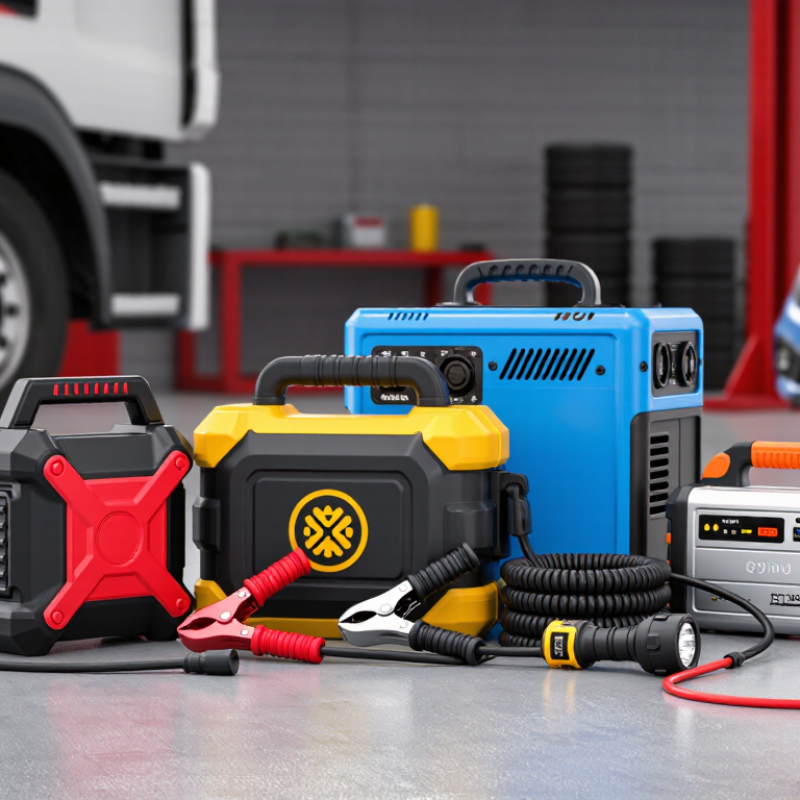
Global buyers entering the 2026 Jump Box market face more choices than simple peak-amp claims suggest. Portable lithium-ion models suit passenger cars, motorcycles, and roadside service kits. Heavy-duty lead-acid units still support trucks, fleets, and workshops requiring repeated starts.

Supercapacitor Jump Box designs deserve attention. They can recharge from a weak battery, but performance depends on battery condition and operating temperature. Lithium models are lighter. They also need careful protection against overheating, overcharging, and reverse polarity.

Safety comes first.

Automotive electrical trainer Craig Van Batenburg has stated, “A jump starter is a backup, not a substitute for diagnosis.” This practical view should guide product selection. A jump box can start an engine, but it cannot repair a damaged alternator or unsafe wiring.

Reliable buyers should compare starting current, voltage compatibility, cable thickness, clamp quality, recharge time, and cold-weather performance. They should also examine transport requirements, regional certifications, warranty coverage, and replacement-battery access. These details often matter more than a large number printed on the package.

The strongest 2026 choices may include compact lithium units, professional lead-acid systems, supercapacitor models, and multifunction emergency devices. However, one category will not fit every market. A tropical delivery fleet may need different protection from a northern roadside operator.

Specifications can mislead.

Real testing remains essential. Suppliers should request independent test records, sample units, and clear technical manuals before placing large orders. Even experienced buyers can overlook standby drain or weak clamps. That mistake can become expensive across borders.
2026 Top Jump Box Types for Global Buyers

What a Jump Box Is and How It Provides Emergency Starting Power

A jump box is a portable battery pack that supplies temporary starting power to a vehicle’s weak or discharged battery. It connects through heavy-duty clamps, usually red to positive and black to negative or ground. The pack supports the starter motor for several seconds. It does not recharge a damaged battery.

The need is substantial. ADAC’s 2024 breakdown report found starter batteries caused 44.1% of roadside failures in Germany during 2023. This figure shows why emergency starting equipment matters for global drivers. A jump box may use lithium-ion or lithium iron phosphate cells. Lithium models are compact, while larger lead-acid units often provide stronger reserve capacity. Check cranking-current ratings carefully. Peak current can look impressive, but starting performance depends on temperature, cable quality, battery condition, and engine size.

In practice, keep the clamps clean and fully attached. Never trust a loose connection. Reverse-polarity protection improves safety, but users still need to read the instructions. UL 2743 covers safety requirements for portable power packs, offering a useful reference for buyers comparing products. Some manufacturers publish optimistic figures. That is worth questioning. A pack rated for one large engine may struggle after repeated starts in freezing weather. Storage temperature, recharge intervals, warranty terms, and verified testing deserve equal attention. The most useful jump box is not always the smallest one. Reliability matters more than impressive packaging.

Main Jump Box Types and Their Distinct Operating Features

2026 Top Jump Box Types for Global Buyers

Main Jump Box Types and Their Distinct Operating Features

Jump boxes generally fall into three groups: lithium-ion, lead-acid, and ultracapacitor models.

Lithium-ion Lithium-ion units are compact, light, and convenient for passenger vehicles. Their internal battery stores energy for repeated starting attempts. However, cold weather can reduce available output and charging efficiency.

Lead-acid Lead-acid jump boxes are heavier, but they provide stable current and tolerate demanding workshop use. They often suit trucks, agricultural equipment, and service fleets. The extra weight is not always a disadvantage.

Ultracapacitor Ultracapacitor models operate differently. They capture a small amount of energy from the vehicle battery or another source. Then, they release a powerful current for a short starting cycle. This design can perform well when the vehicle battery is weak but not completely empty. It usually recharges faster than chemical batteries. Still, it may be less suitable for vehicles with no recoverable voltage. Buyers should check the required starting current, voltage range, cable length, and clamp insulation.

Safety features deserve equal attention. Reverse-polarity alerts, overload protection, thermal control, and clear charge indicators reduce operating mistakes.

A higher peak-current figure does not automatically mean better performance. Testing conditions can vary between suppliers. Product data sometimes looks more precise than it really is.

For global purchasing, review temperature ratings, transport requirements, socket standards, and service support. No type is perfect. The correct choice depends on engine size, working climate, storage habits, and expected starting frequency.

How Battery Capacity, Output Current, and Voltage Affect Performance

2026 Top Jump Box Types for Global Buyers

Battery capacity, output current, and voltage shape a jump box’s real performance. They should not be judged by capacity alone.

Capacity, measured in watt-hours or amp-hours, affects how many starting attempts are available. A larger battery helps during cold mornings, repeated testing, or roadside delays. However, extra capacity often increases weight and charging time. A compact unit may start a small engine reliably, but struggle with larger diesel engines.

Output current matters more during the first few seconds. Petrol engines usually need less starting current than diesel engines. A unit with strong peak current can handle thicker oil and weaker batteries more effectively. Yet peak current figures may be measured briefly. I look for cranking current, cable quality, clamp strength, and performance under low temperatures. Numbers alone can mislead.

Voltage must match the vehicle system. Most passenger vehicles use 12 volts, while larger equipment may require different systems. Using the wrong voltage can damage electrical components. Check the vehicle manual before connecting anything. Polarity protection, overheat control, and clear status indicators add practical safety. In workshop checks, a jump box may meet its advertised rating but perform poorly with thin cables or a half-charged battery. That detail is easy to overlook. I also question universal claims, because temperature, battery age, and engine size change the result.

2026 Top Jump Box Types for Global Buyers - How Battery Capacity, Output Current, and Voltage Affect Performance

Jump Box Type Typical Battery Capacity Nominal Voltage Peak Output Current Recommended Vehicle Size Expected Jump-Start Performance Main Advantages Key Limitations
Compact Lithium-Ion 6,000–12,000 mAh
Approximately 22–44 Wh
12 V system 300–800 A Small cars, motorcycles, compact vans, and gasoline engines up to about 3.0 L Usually suitable for occasional emergency starts when the vehicle battery is discharged but not severely damaged Lightweight, portable, low self-discharge, and convenient for personal vehicles Limited reserve energy and reduced performance in very cold conditions or with large diesel engines
High-Output Lithium-Ion 15,000–30,000 mAh
Approximately 55–111 Wh
12 V system 1,000–2,000 A Most passenger cars, SUVs, light trucks, and gasoline engines up to about 6.0 L Provides stronger cranking support and more repeat-start capability than compact units High power-to-weight ratio, multiple charging ports, and good portability Higher cost, heat-management requirements, and capacity can decline with age and cold exposure
Heavy-Duty Lithium-Ion 30,000–50,000 mAh
Approximately 111–185 Wh
12 V system 2,000–4,000 A Large SUVs, commercial vans, construction equipment, and diesel engines up to about 10.0 L Designed for high-resistance cranking systems and repeated starts during roadside or field service High starting power, larger energy reserve, and useful performance across a broad vehicle range Heavier and more expensive; correct cable size, protection circuitry, and thermal design are important
Lead-Acid Portable Booster 12–22 Ah
Approximately 144–264 Wh
12 V system 400–1,700 A Passenger vehicles, trucks, agricultural equipment, and service vehicles Delivers strong short-duration current and can support several starts when fully charged Proven technology, high surge capability, and relatively stable performance over a wide temperature range Heavy, bulky, slower to recharge, and more vulnerable to damage from deep discharge
Supercapacitor Jump Starter Energy is commonly specified by capacitor module rather than mAh
Short-duration stored energy
12 V system 500–2,000 A Passenger cars and light commercial vehicles with a partially available battery or auxiliary charging source Can provide a rapid burst of current, but generally offers fewer repeat-starts than a large battery-based unit Very fast recharge from residual battery voltage, long cycle life, and low sensitivity to storage aging Less effective when the vehicle battery is completely flat; limited energy reserve after each discharge
24 V Commercial Jump Box 20,000–60,000 mAh equivalent
Approximately 480–1,440 Wh at 24 V
24 V system 1,000–3,000 A Heavy trucks, buses, mining vehicles, agricultural machinery, and large diesel equipment Supplies the higher system voltage required by many commercial vehicles and large diesel starters High starting capability and suitability for professional fleets and field-maintenance operations Must not be connected to a 12 V vehicle unless the unit has a verified 12/24 V selection system; larger and heavier
Multi-Voltage Professional Unit Typically 20,000–80,000 mAh equivalent
Capacity depends on the selected voltage output
12 V / 24 V selectable 1,000–3,000 A Mixed fleets ranging from passenger vehicles to trucks and off-road machinery Offers flexible support across different vehicle electrical systems when voltage selection and protection are correctly managed Versatile fleet coverage, built-in safety controls, and strong suitability for workshops Higher purchase price and greater risk of electrical damage if the voltage setting is selected incorrectly
Technical Notes: Battery capacity in mAh is normally measured at a cell voltage and should not be compared directly across different voltage systems. Energy in watt-hours can be estimated as Wh = Ah × V. Peak current is a short-duration rating; actual cranking performance also depends on cable resistance, battery temperature, engine displacement, oil viscosity, battery condition, and the manufacturer's testing method.

Choosing Jump Box Types for Vehicles, Climates, and Work Environments

2026 Top Jump Box Types for Global Buyers

Choosing Jump Box Types for Vehicles, Climates, and Work Environments

Choosing a jump box starts with the vehicle, not the advertised peak current. Small cars usually need compact lithium units with reliable cold-cranking output. Diesel vans and heavy equipment require higher-capacity models, thicker cables, and stronger clamps. Check the vehicle manual before comparing specifications.

Climate changes the decision. In freezing regions, select a unit tested for low-temperature starting and store it above freezing when possible. In hot workshops, heat-resistant housing and overcharge protection matter more. Humid coastal sites need sealed construction, corrosion-resistant terminals, and clear battery indicators. A bright display helps during roadside repairs at night.

Work conditions also shape the best type. A private driver may value low weight, USB charging, and simple controls. Fleet technicians often need rugged jump boxes, long cables, work lights, and repeated-use durability. Construction crews may prefer impact-resistant cases and dust protection. I once chose a compact unit for convenience, then found its short cables awkward on a truck. That mistake still influences my recommendations. Capacity ratings can also confuse buyers. Real performance depends on battery condition, temperature, cable quality, and maintenance. No specification replaces practical testing. Look for documented safety protections, readable instructions, and dependable after-sales support. The right jump box should fit the vehicle, climate, and daily workload without forcing users to guess.

2026 Top Jump Box Types for Global Buyers

Representative peak-current classes commonly specified for different vehicle, climate, and work-environment requirements. Higher current capacity is generally better suited to larger engines and cold-start conditions, but actual performance depends on battery condition, cable quality, and temperature.

Values are representative market specification classes in amperes, not guaranteed starting performance. Always verify vehicle voltage, engine size, and operating-temperature requirements before purchase.

Global Buying Factors: Safety Standards, Portability, and Supplier Support

2026 Top Jump Box Types for Global Buyers

Global buyers should assess jump boxes through safety, portability, and supplier support. A stable box needs a non-slip base, reinforced corners, and controlled landing surfaces. ISO 20957-1 offers a useful benchmark for stationary training equipment, although it may not cover every box design. EN 913 can also guide material, stability, and testing discussions for gym equipment. Requirements still vary by destination market. Do not treat one certificate as universal approval.

Portability matters when facilities change layouts or ship equipment across borders. Foam-coated boxes reduce impact concerns, while wooden and steel models often provide firmer training feedback. However, heavier construction can increase freight costs and handling risks. A 2021 CPSC staff report estimated 445,642 emergency-department-treated injuries involving exercise equipment in the United States. This figure covers many equipment types, not jump boxes alone. It still shows why product testing and clear user instructions deserve attention. Some buyers focus too much on price. That judgment can age badly.

Tips: Ask suppliers for load-test records, material specifications, surface-friction data, and packaging photos. Request replacement-part availability and written inspection guidance. Check whether instructions include height selection, landing space, and maximum user weight. A supplier should answer technical questions quickly. Slow replies may become serious after delivery. Keep one sample for hands-on testing before placing a large order. Supplier support is not a bonus; it is part of product safety.