
Skip to Content
chevron-left chevron-right chevron-up chevron-right chevron-left arrow-back star phone quote checkbox-checked search wrench info shield play connection mobile coin-dollar spoon-knife ticket pushpin location gift fire feed bubbles home heart calendar price-tag credit-card clock envelop facebook instagram twitter youtube pinterest yelp google reddit linkedin envelope bbb pinterest homeadvisor angies

What Are the Top Concrete Batching Plants for Global Buyers?

Concrete Batching plants are becoming strategic assets for contractors, infrastructure developers, and ready-mix producers worldwide. The Global Cement and Concrete Association reports that the industry produces approximately 14 billion cubic metres of concrete annually. This enormous volume supports roads, bridges, housing, ports, and renewable-energy facilities. Yet, production quality varies sharply between projects. The best plant is not always the largest one. It must match local materials, output targets, transport distances, climate, and maintenance skills.

Global buyers therefore need more than a supplier catalogue. They should examine mixing accuracy, aggregate storage, dust control, automation, spare-parts access, and operator safety. ASTM C94 and EN 206 provide useful benchmarks for ready-mixed concrete quality, while ISO 9001 certification can indicate a controlled production system. However, certification alone proves little about daily performance. A plant may carry impressive documents but struggle with humid sand, unstable electricity, or delayed technical support.

Industry data also strengthens the business case for careful selection. The International Energy Agency identifies cement and concrete as major industrial emissions sources, making material efficiency increasingly important. Modern plants can reduce waste through accurate dosing, moisture sensors, recycled-water systems, and automated batch records. These features matter when margins are narrow. They matter more on remote sites.

This guide compares leading Concrete Batching plants for global buyers. It considers stationary, mobile, compact, and high-capacity configurations. The comparison remains practical, not promotional. Some “top” models may disappoint in specific markets. That uncomfortable point deserves attention. A reliable decision should combine verified production tests, lifecycle costs, local references, and realistic after-sales support.
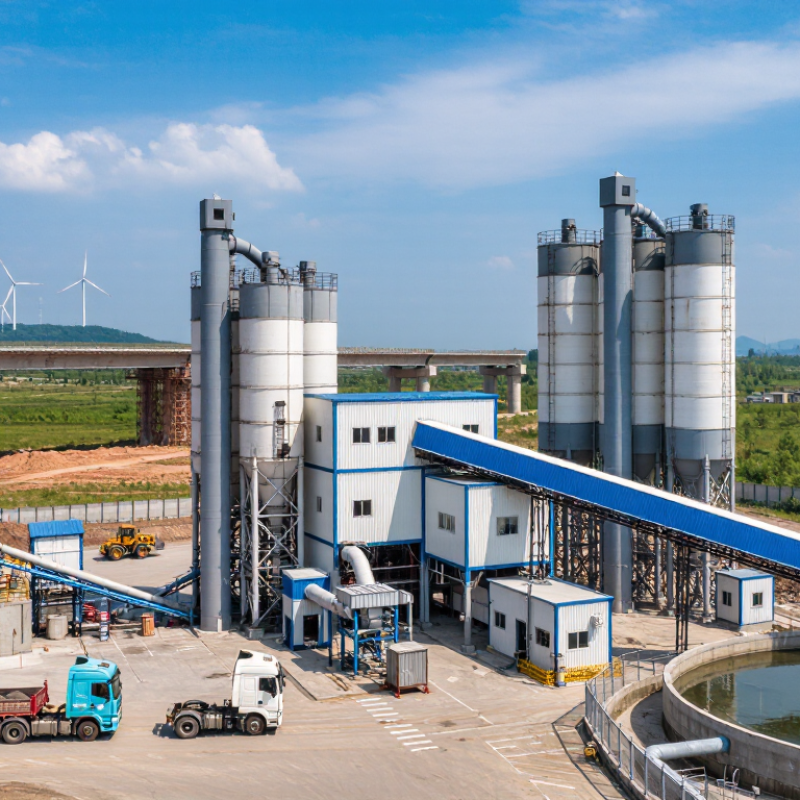
What Are the Top Concrete Batching Plants for Global Buyers?

Concrete Batching Plant Basics and Main Types

Concrete batching plants combine cement, aggregates, water, and admixtures in controlled proportions. The Global Cement and Concrete Association estimates that around 14 billion cubic metres of concrete are produced globally each year. That scale makes batching accuracy more than a technical preference.

A stationary plant suits large infrastructure projects with stable production locations. It usually offers higher output, larger aggregate bins, and stronger automation. A mobile plant fits temporary sites and shorter projects. It can be transported and installed faster, although its storage capacity may be smaller. Compact plants serve urban projects where space, noise, and traffic require tighter planning. Dry-batch plants mix materials mainly in transit mixers, while wet-batch plants mix concrete inside a central mixer. Wet mixing normally gives better consistency.

Plant selection should match daily volume, haul distance, aggregate moisture, and local power reliability. A practical buyer should inspect calibration records, weighing tolerances, dust-control equipment, and spare-part access. The American Concrete Institute’s ACI 304R guidance stresses controlled measuring, mixing, and delivery procedures. The UN World Urbanization Prospects projects that 68% of people may live in urban areas by 2050. Demand will grow, but urban sites are not always simple. Real conditions are messier. Rain can change sand moisture within hours, and traffic can disrupt delivery cycles. A high-capacity plant may still underperform without disciplined testing and experienced operators.

Key Criteria for Comparing Global Batching Plant Suppliers

Global buyers should compare batching plant suppliers by verified performance, not brochure capacity. Start with output consistency. Request a witnessed test using local aggregates, target mixes, and real moisture variation. Check weighing tolerance, mixer cycle time, dust control, and calibration records. ASTM C94/C94M and EN 206 offer useful reference points, but local specifications still govern acceptance. Ask for commissioning procedures, operator training, and corrective-action records. A supplier sharing failed-test lessons may be more dependable than one promising perfection.

No scorecard is perfect.

Calculate lifecycle cost over ten years, including energy, water, wear parts, software, labor, and transport delays. The IEA reports that cement production creates about 7% of global carbon dioxide emissions, making waste reduction and efficient material handling important purchasing criteria. Request measured electricity use per cubic meter, recycled-water capability, moisture sensors, and filtration performance.

The World Bank’s 2023 Logistics Performance Index highlights infrastructure, shipment reliability, tracking, and delivery timeliness; these factors directly affect spare-parts support. Compare service coverage, response times, language support, warranty exclusions, and cybersecurity controls. Ask for references from climates similar to the installation site. A low purchase price can hide expensive downtime.

I would still challenge every projected saving, because site conditions often prove less cooperative than spreadsheets suggest.

Top Concrete Batching Plant Models for Different Projects

What Are the Top Concrete Batching Plants for Global Buyers?

Top Concrete Batching Plant Models for Different Projects

Project conditions should determine the batching plant model. The Global Cement and Concrete Association reports that the world uses about 14 billion cubic metres of concrete annually. That scale hides major differences between projects.

A stationary wet-mix plant suits high-volume construction, such as bridges, tunnels, and multi-storey buildings. Typical output ranges from 60 to 240 cubic metres per hour. It offers stable dosing, accurate moisture control, and better laboratory supervision. However, installation needs foundations, permits, and reliable material storage.

Mobile plants fit roadwork, housing developments, and remote sites. Many models produce about 25 to 80 cubic metres per hour and can relocate between pours. They reduce setup time, but frequent movement may affect calibration.

A compact plant works well for urban repairs and small commercial projects. Dry-mix systems can lower initial costs, while wet-mix systems usually provide stronger consistency during demanding pours. The choice is not always obvious.

The International Energy Agency estimates global cement production at roughly 4.1 billion tonnes in 2023. This pressure makes efficient batching increasingly important.

Buyers should check scale accuracy, mixer wear, dust filtration, water recycling, and control-system records. ASTM C94/C94M and EN 206 offer useful benchmarks for ready-mixed concrete quality.

In practice, a plant rated for maximum output may perform poorly with wet aggregates or unstable electricity. A modest model, properly maintained, can sometimes deliver better results than a larger one. Testing local materials before purchase remains essential.

Global Standards, Automation, and Environmental Performance

For global buyers, the top concrete batching plants are not defined by output alone. They combine verified quality control, flexible automation, and measurable environmental performance. ISO 9001 supports consistent production systems, while ISO 14001 strengthens environmental management. Plants supplying international projects should also align mix design and testing with EN 206, ASTM standards, or equivalent national requirements. Local compliance still matters.

Automation should control aggregate weighing, moisture correction, cement dosing, and truck dispatch. Moisture sensors are especially valuable after heavy rain, when sand conditions can change rapidly. Digital batch records also improve traceability and reduce manual errors. However, automation is not a magic solution. Poor calibration can create expensive mistakes. Independent weighing checks and regular technician training remain essential.

Environmental data deserves equal attention. The International Energy Agency reports that cement production creates about 7% of global energy-related and process CO2 emissions. A responsible plant should therefore document cement use, electricity consumption, water recovery, and dust emissions. Recycled process water, covered conveyors, sealed storage, and low-idle equipment can reduce daily impacts. The Global Cement and Concrete Association’s 2050 roadmap supports lower-carbon concrete through efficiency, alternative materials, and carbon management. Buyers should request measured data, not broad green claims. A practical evaluation may include monthly water intensity, recycled aggregate ratios, and batch rejection rates. Some plants still overlook noise and traffic impacts. That gap deserves closer review before purchase.

What Are the Top Concrete Batching Plants for Global Buyers? - Global Standards, Automation, and Environmental Performance

Plant Configuration Typical Output Range Best-Fit Application Global Standards and Compliance Automation Level Environmental Performance Key Buyer Checkpoint
Compact Mobile Plant 20–60 m³/h nominal rated capacity Remote projects, road construction, short-term sites, and frequent relocation Check conformity with EN 206, ASTM C94/C94M, or the applicable national concrete standard; verify local transport and electrical requirements Basic to intermediate PLC control; load-cell weighing; recipe storage may be available Lower civil-work requirement; dust filters and enclosed transfer points should be specified; water-recycling options vary Confirm transport dimensions, setup time, calibration procedure, and actual output under local aggregate conditions
Stationary Twin-Shaft Plant 60–180 m³/h nominal rated capacity Commercial concrete, precast production, urban infrastructure, and continuous supply projects Common reference frameworks include EN 206, ASTM C94/C94M, ISO 9001 quality systems, and applicable electrical and machinery safety rules Advanced PLC/SCADA control; automatic batching, moisture compensation, alarm logging, and production reports High batching accuracy can reduce over-dosing; recommended systems include pulse-jet dust collection, sealed conveyors, and wash-water recovery Request independent weighing accuracy data, moisture-probe performance, mixer wear specifications, and service response coverage
High-Capacity Aggregate-Bin Plant 120–240+ m³/h nominal rated capacity Large highways, dams, airports, tunnels, and major concrete-intensive infrastructure Project specifications may reference EN 206, ASTM C94/C94M, ACI guidance, or national construction codes; third-party commissioning is recommended High automation with centralized control, multi-recipe management, production traceability, remote diagnostics, and batch-data export Designed for high throughput; specify covered storage, dust suppression, runoff control, reclaim systems, and energy monitoring Evaluate peak-hour stability, redundant equipment, silo capacity, spare-parts strategy, and commissioning support
Containerized Modular Plant 30–120 m³/h nominal rated capacity Export projects, constrained sites, disaster-response construction, and phased developments Confirm compliance with the destination country’s machinery safety, electrical, pressure-equipment, and concrete-production requirements Intermediate to advanced PLC control; modular expansion and remote monitoring are commonly available Reduced installation work and compact footprint; specify filtration, noise control, spill containment, and water reuse Check container loading plans, climate protection, voltage compatibility, commissioning method, and local technical support
Precast and High-Precision Plant 30–150 m³/h, depending on product cycle and mixer configuration Pavers, pipes, panels, beams, blocks, and other controlled-factory concrete products Production should align with the relevant product standards, EN or ASTM material requirements, and documented quality-control procedures Advanced recipe control, automatic dosing, moisture correction, production records, and integration with plant-management software High material-use efficiency is possible through accurate dosing and recycled aggregate management; dust and wash-water systems should be enclosed Prioritize repeatability, batch-to-batch variation data, calibration intervals, mixer cleanout time, and integration capability
Low-Carbon and Recycled-Material Ready Plant 40–180 m³/h nominal rated capacity Projects using supplementary cementitious materials, recycled aggregates, reclaimed water, or carbon-reduction targets Verify compatibility with EN 206, ASTM C94/C94M, local recycled-aggregate rules, and project-specific environmental declarations Advanced material tracking, moisture and density measurement, recipe authorization, data logging, and sustainability reporting support Supports cement-reduction strategies, recycled aggregate dosing, wash-water recovery, dust collection, and energy-performance monitoring Confirm material-handling limits, additional silo requirements, reclaimed-water quality controls, and verified life-cycle data

Buyer Evaluation Notes

Capacity figures are typical nominal ranges rather than guaranteed production rates. Actual output depends on mix design, aggregate moisture, mixer cycle time, material handling, plant layout, and operating conditions.

Before procurement, require documented weighing accuracy, calibration records, applicable conformity documents, dust and wastewater-control specifications, energy data, spare-parts availability, and commissioning support for the destination country.

How International Buyers Can Select the Right Plant

What Are the Top Concrete Batching Plants for Global Buyers?

International buyers should judge a concrete batching plant against actual project conditions, not brochure capacity. Selection begins with output, aggregate moisture, climate, and delivery distance. A 60-cubic-meter-per-hour plant may suit a mid-sized project, but not a remote highway requiring continuous pours. Ask for test data using similar materials and production cycles. Showroom figures can be too optimistic.

Check mixer design, weighing accuracy, control systems, and cleaning access. For export projects, electrical standards, voltage, container dimensions, and local permits also matter. A technically strong plant can still fail when replacement sensors need six weeks to arrive. Review spare-parts lists, remote support hours, installation drawings, and operator training. Insist on recent calibration records. Small details decide uptime.

Evaluate total cost, including shipping, foundations, assembly cranes, energy use, dust-control equipment, and maintenance labor. Visit an operating site when possible, or request an independent inspection. Speak with operators, not only sales staff. Their comments may reveal belt spillage, cleaning time, or noisy alarms. Consider local weather and workmanship too. My own checklist could still miss something: installation quality often changes the final result. A plant selected on price alone may look efficient on paper and troublesome in concrete.