Best Science Museum Exhibits from China for Global Buyers
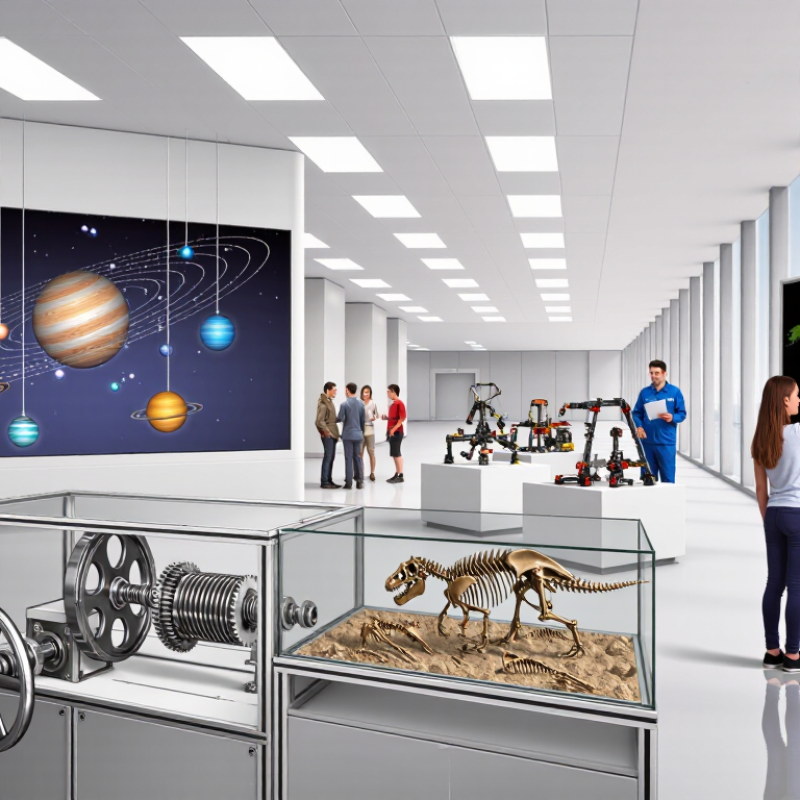
China has become a practical source of Science Museum Exhibits for museums, schools, visitor centers, and private educational projects worldwide. Its manufacturers offer interactive physics stations, fossil displays, astronomy models, robotics platforms, and immersive digital installations. These products can combine durable fabrication with engaging storytelling. A child may turn a hand wheel and watch gears transfer motion through a transparent panel. Another visitor may track a simulated storm across a glowing climate map.
For global buyers, selecting an exhibit requires more than comparing prices. Reliable evaluation should include material specifications, electrical safety, software compatibility, accessibility, maintenance access, and installation support. Experienced suppliers can provide drawings, sample videos, factory inspections, and testing records before production. Buyers should also confirm regional certifications and shipping requirements with qualified professionals. A low quotation may hide costly updates, replacement parts, or training gaps. That matters.
This guide examines Chinese exhibits through practical buying considerations. It highlights design quality, educational value, customization capacity, delivery reliability, and after-sales communication. It also considers how exhibits perform after months of public use, not only during a showroom demonstration. Some claims may look impressive but need independent verification. That is worth remembering. The strongest purchasing decisions balance visual appeal with evidence, safety, budget control, and long-term visitor experience. Manufacturers differ widely, and no single exhibit suits every museum. Clear requirements and careful testing remain essential.
What Defines a High-Quality Science Museum Exhibit from China
A high-quality science museum exhibit from China must do more than look impressive. It should explain complex ideas through clear stories, safe interaction, and measurable learning outcomes. UNESCO’s 2021 report found that nearly 90% of museums closed during the pandemic, exposing the need for flexible digital and physical experiences. Buyers should therefore inspect whether an exhibit supports remote updates, multilingual content, and reliable visitor data.
In practical evaluations, I look for sturdy materials, accurate science, and controls that children can understand within seconds. A cracked acrylic panel or unclear translation quickly damages trust. I also check accessibility, maintenance manuals, spare-part plans, and local electrical compliance. ICOM’s 2020 survey recorded temporary closures for 94.7% of museums, reminding buyers that operational resilience matters. A polished screen is not enough. Some suppliers still overvalue novelty.
Tips: Request a working prototype before purchase. Test it with children, educators, and visitors with disabilities. Ask for evidence from previous installations, including fault rates, visitor dwell time, and learning feedback. Do not accept “interactive” as proof of quality. Require documented testing for touchscreens, moving parts, lighting, and emergency stops. The best exhibit usually feels simple, although its engineering is not. One weakness remains common: beautiful demonstrations may encourage short visits without deeper understanding.
Main Categories of Chinese Science Museum Exhibits for Global Buyers
Chinese science museum exhibits cover several practical categories for global buyers. Astronomy exhibits may include planetarium systems, meteorite displays, and interactive lunar models. Physics collections often demonstrate motion, light, sound, electricity, and magnetic force through hands-on stations. These exhibits help visitors test ideas instead of only reading descriptions.
Life science and ecology exhibits focus on anatomy, biodiversity, climate, and local habitats. Detailed models, transparent specimens, and digital microscopes can make small structures visible. Earth science displays may present rock cycles, earthquakes, volcanoes, and geological layers. For younger audiences, touchscreens and mechanical activities should use simple controls and strong visual feedback.
Technology categories include robotics, engineering, renewable energy, and artificial intelligence demonstrations. Buyers should request multilingual labels, accessible layouts, replacement parts, and clear maintenance records. In my experience, a beautiful prototype can still disappoint if staff cannot repair it quickly. A working test unit matters.
Durability deserves careful attention. Exhibits face constant touching, cleaning, transportation, and changing visitor numbers. Materials should match local safety requirements and indoor climate conditions. Some interactive systems consume more power than expected. This detail is easy to miss. Buyers should inspect wiring, software updates, spare components, and installation training before placing an order. No exhibit is perfect, but transparent limitations support better museum planning.
Best Science Museum Exhibits from China for Global Buyers
Main Categories of Chinese Science Museum Exhibits for Global Buyers
The chart compares major exhibit categories using factual reference points commonly presented in science museums: eight planets, seven continents, three domains of life, four fundamental forces, six simple machines, and two binary states. These reference points help global buyers evaluate educational scope and interactive exhibit potential without using company or brand data.
Key Features to Compare Before Selecting Museum Exhibits
Best Science Museum Exhibits from China for Global Buyers
Selecting a science exhibit requires more than impressive visuals. Compare learning goals, scientific accuracy, durability, and visitor flow. The ICOM Museum Definition, adopted in 2022, emphasizes accessibility, inclusion, and public participation. These principles should guide every purchasing decision.
Request evidence for the exhibit’s testing process, maintenance schedule, and educational outcomes. A working prototype is valuable, but it does not prove long-term reliability. Check materials, spare-part availability, software updates, and voltage compatibility before shipment. The WHO reports that 1.3 billion people, or 16% of the global population, experience significant disability. Therefore, buyers should examine wheelchair access, captioning, audio guidance, tactile controls, and adjustable interaction heights. Small details matter. A narrow entrance can exclude families.
Tips: Ask suppliers for visitor-testing records, bilingual manuals, safety documentation, and a five-year ownership estimate. Compare noise levels, cleaning requirements, installation time, and staff training. UNESCO’s Museums Around the World report recorded widespread museum closures during the pandemic, exposing the importance of flexible digital and physical experiences. Still, digital features can age quickly. I have seen novelty receive more attention than educational value. That is a useful warning. Select exhibits that explain complex ideas clearly, invite repeated use, and remain serviceable when technology changes. Pilot testing with local educators and children may reveal problems that a polished sales demonstration hides.
| Exhibit Category | Core Science Topics | Recommended Visitor Age | Typical Visitor Interaction | Typical Footprint | Typical Power Requirement | Main Selection Criteria | Global Buyer Considerations |
|---|---|---|---|---|---|---|---|
| Dinosaur and Fossil Reconstruction Life Science Earth Science | Paleontology, evolution, extinction events, fossil formation, geological time, and comparative anatomy. | Ages 6 and above; suitable for family museums, natural-history galleries, and school groups. | Large-scale skeletal or life-form replica, touchable fossil samples, digital timeline, and guided interpretation panel. | Approximately 4–20 m², depending on whether the exhibit is a single specimen or a complete scene. | Usually none for static models; approximately 100–500 W when lighting, sensors, or a display screen is included. | Anatomical accuracy, structural stability, surface finish, scale, transport packaging, and cleaning access. | Confirm fire-rating requirements, local conservation terminology, multilingual labels, crate dimensions, and installation method. |
| Planetarium and Space Exploration Exhibit Astronomy Physics | Solar-system motion, planetary science, stars, galaxies, spaceflight, and observational astronomy. | Ages 8 and above; advanced content can support secondary-school and adult learning. | Interactive projection, star-map navigation, tactile planetary models, mission simulation, and touchscreen content. | Approximately 15–80 m² for a compact interactive zone; dome systems require additional ceiling clearance. | Approximately 1–8 kW for projectors, computers, ventilation, audio, and control equipment. | Image resolution, content-update workflow, projection alignment, acoustic treatment, visitor throughput, and serviceability. | Check electrical voltage compatibility, content localization, accessibility features, room darkness, ceiling height, and software support. |
| Robotics and Industrial Automation Engineering Artificial Intelligence | Sensors, programming logic, automation, machine vision, motion control, and human–machine interaction. | Ages 8 and above; appropriate for technology museums, innovation centers, and vocational education. | Programmable robotic arm, conveyor demonstration, object-sorting task, coding interface, or guided motion sequence. | Approximately 6–25 m², including a guarded operating zone and visitor-control area. | Approximately 0.8–3 kW, depending on motors, control cabinets, screens, and safety systems. | Safety guarding, emergency stop access, repeatability, operating cycle time, software usability, and maintenance training. | Confirm voltage and plug standards, machine-safety documentation, restricted operating zones, spare parts, and local technician training. |
| Renewable Energy Demonstration Energy Climate | Solar power, wind power, energy conversion, storage, efficiency, electricity demand, and carbon reduction. | Ages 7 and above; adaptable for public education, schools, and sustainability galleries. | Visitors adjust light intensity, airflow, blade angle, load demand, or battery-storage settings and observe output changes. | Approximately 3–12 m² for a tabletop or freestanding demonstration. | Typically 50–800 W; some photovoltaic demonstrations use dedicated lamps rather than outdoor sunlight. | Measurable output, data accuracy, transparent mechanisms, electrical protection, component replacement, and educational clarity. | Verify indoor environmental limits, electrical safety markings, climate-data units, multilingual instructions, and replacement-part availability. |
| Human Body and Medical Science Biology Health Science | Anatomy, physiology, circulation, respiration, senses, biomechanics, and preventive health. | Ages 8 and above; content can be configured for children, families, or professional training. | Anatomical models, pulse and lung demonstrations, reaction-time tests, balance activities, and digital body maps. | Approximately 5–20 m², depending on the number of stations and privacy requirements. | Approximately 100–700 W for sensors, lighting, computers, and touch displays. | Scientific accuracy, hygienic surfaces, accessibility, data privacy, replaceable sensors, and age-appropriate interpretation. | Review health claims, translation quality, cleaning protocols, accessibility compliance, and whether any visitor data is stored. |
| Optics, Light, and Visual Perception Physics Psychology | Reflection, refraction, lenses, color mixing, polarization, optical illusions, and visual perception. | Ages 6 and above; effective for high-volume family visitation and school demonstrations. | Visitors manipulate mirrors, lenses, prisms, polarized filters, shadow systems, and optical-illusion panels. | Approximately 2–10 m² for a modular station or a small cluster of experiments. | Usually none for passive experiments; approximately 50–300 W when LED lighting or a digital display is included. | Brightness control, optical precision, scratch resistance, low-maintenance parts, visitor flow, and replacement components. | Check ambient-light conditions, language-independent graphics, cleaning requirements, electrical conformity, and glare management. |
| Earthquake and Geology Simulator Geology Civil Engineering | Plate tectonics, seismic waves, building response, fault movement, rock cycles, and disaster preparedness. | Ages 10 and above; particularly suitable for science centers and public-safety education. | Controlled platform motion, building-model comparison, seismic-wave visualization, and interactive fault-map display. | Approximately 8–30 m², including a safe standing area and control interface. | Approximately 1–6 kW, depending on platform size, actuator system, displays, and safety controls. | Motion limits, mechanical safety, load rating, noise level, emergency stop system, calibration, and maintenance access. | Confirm regional building codes, floor-loading limits, electrical requirements, accessibility, operator training, and insurance documentation. |
| Water Cycle and Environmental Ecology Environmental Science Hydrology | Evaporation, condensation, precipitation, runoff, groundwater, ecosystems, pollution, and water conservation. | Ages 5 and above; suitable for children’s museums, environmental centers, and sustainability exhibitions. | Water-flow table, watershed model, filtration activity, rainfall simulation, pump controls, and pollution-removal demonstration. | Approximately 6–25 m², with additional space for drainage, drying, and visitor circulation. | Approximately 100–1,000 W for pumps, lighting, sensors, and control equipment. | Waterproof construction, drainage design, sanitation, leak prevention, pump access, noise control, and water replenishment. | Confirm water-quality procedures, local drainage rules, floor protection, cleaning schedule, accessibility, and consumable costs. |
| Materials Science and 3D Manufacturing Materials Design Engineering | Material properties, polymers, metals, composites, additive manufacturing, testing, and product design. | Ages 10 and above; appropriate for advanced school programs, maker spaces, and engineering galleries. | Material-testing demonstrations, 3D-model visualization, controlled printing process, sample comparison, and design challenges. | Approximately 8–30 m², depending on equipment, ventilation, worktables, and supervised activity space. | Approximately 0.5–2.5 kW for printers, heating elements, computers, extraction, and display systems. | Material safety, ventilation, noise, print reliability, operating supervision, software localization, and consumable management. | Review emissions and fire precautions, electrical certification, import rules for equipment, operator training, and ongoing material supply. |

How to Evaluate Chinese Suppliers, Safety, and Product Compliance
For global buyers, the best science museum exhibits from China combine visual impact with documented safety controls. A supplier should provide factory details, material specifications, electrical test reports, and installation procedures. Ask for batch numbers on control boxes and certificates that match the exact model. ISO’s 2022 Survey recorded about 1.26 million ISO 9001 certificates worldwide, but certification alone does not prove exhibit safety. It shows a management system, not perfect production.
Check compliance against the destination market. Electrical exhibits may require low-voltage, electromagnetic compatibility, and fire-safety assessments. Interactive units also need guarding, emergency stops, accessible controls, and safe surface temperatures. The EU Safety Gate 2023 report listed 3,412 product alerts, with toys among the most frequently reported categories. Some museum exhibits resemble large educational toys. That comparison deserves care. It may affect testing decisions, even when the legal classification differs. Request accredited laboratory reports, not only supplier-issued declarations. Visit the factory when possible, and inspect wiring, fasteners, protective covers, and software updates.
Tips: Use a compliance checklist before price negotiation. Verify certificate numbers independently. Require a pre-shipment inspection. Keep approved drawings and photographs in the contract file. I have seen attractive prototypes change during mass production. That gap is easy to miss. Ask for a signed change-control process, spare-parts terms, and a realistic maintenance schedule. A cheaper exhibit can become expensive after repeated sensor failures, unclear manuals, or unavailable replacement components.
Ordering, Customization, Shipping, and Installation Considerations
Best Science Museum Exhibits from China for Global Buyers Ordering a science exhibit requires more than selecting attractive visuals. Confirm dimensions, visitor age, power standards, software language, and accessibility before signing. A detailed purchase specification prevents expensive revisions. The World Bank’s 2023 Logistics Performance Index scores customs, infrastructure, and tracking on a 1–5 scale. These categories matter when importing interactive equipment. Request test videos, wiring diagrams, spare-part lists, and a factory acceptance checklist. Ask for a realistic production schedule. Delays happen.
Customization should preserve scientific accuracy. Suppliers can adjust casing colors, interface languages, labels, and learning objectives. However, excessive changes may weaken durability or confuse visitors. Independent technical review is useful, especially for moving parts, electricity, and child safety. The International Maritime Organization reports that maritime transport carries over 80% of global merchandise trade by volume. Pack sensitive sensors with shock indicators, moisture protection, and removable modules. Use clear Incoterms 2020 responsibilities for insurance, customs clearance, unloading, and site delivery.
Tips: Measure the final gallery route first. Photograph doors, lifts, and ceiling obstructions. Shipping crates must fit the real path, not only the loading dock. Plan installation training in the contract, including commissioning records and remote support. Leave contingency time for customs inspections and damaged components. My practical concern is often overlooked: a beautiful prototype may not survive daily school groups. Request a durability trial with repeated visitor use. Check the results honestly. Perfect projections rarely exist.