What is Small End Bearing and Its Applications in Industry?
Small End Bearing plays a crucial role in various mechanical systems. It is an essential component found in many rotating machinery applications. These bearings are often overlooked, but they are vital for smooth operations.
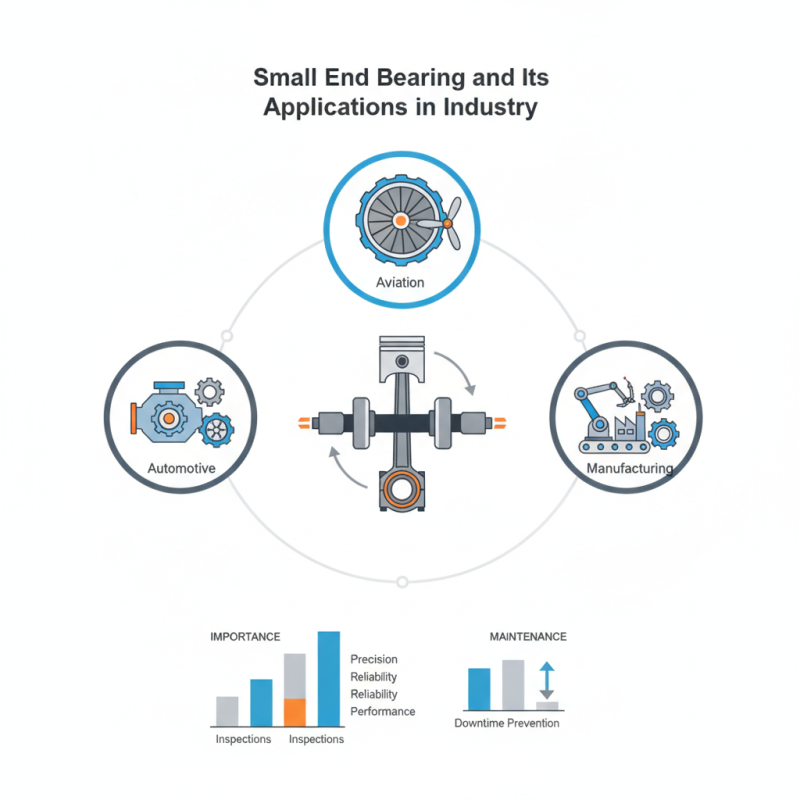
In engines and other machinery, the Small End Bearing supports connecting rods. This support allows for the conversion of linear motion to rotational motion. Industries such as automotive, aviation, and manufacturing rely heavily on these components. The precision and reliability of Small End Bearings contribute significantly to overall performance.
However, maintenance is often neglected. Users might underestimate the impact of wear and tear. Regular inspections can prevent costly downtimes. Understanding the applications and importance of Small End Bearings is essential for engineers and technicians. It ensures optimal functionality and longevity of equipment.
Definition and Function of Small End Bearings in Mechanical Systems
Small end bearings play a crucial role in mechanical systems, providing support and facilitating smooth movement. These components are typically found in connecting rods of internal combustion engines. Their design allows for movement in multiple directions while minimizing friction. This is essential for the efficiency of engine performance.
In addition to engines, small end bearings are used in various industrial applications. They can be found in equipment like pumps and compressors. Their ability to handle misalignment and radial loads helps maintain the integrity of mechanical systems. Over time, these bearings may show signs of wear, resulting in inefficiencies and performance issues. Regular maintenance and periodic inspection can prevent potential breakdowns.
Despite their importance, the manufacturing of small end bearings is not without challenges. Material selection and precision engineering are critical for durability. If not done correctly, it can lead to premature failure. This highlights the need for continuous improvement and testing in production methods. Reflecting on these aspects can lead to better innovations and reliability in future designs.
Applications of Small End Bearings in Various Industries
This chart illustrates the distribution of small end bearing applications across various industries, highlighting their significance in automotive (40%), aerospace (25%), and other sectors.
Key Components and Design Features of Small End Bearings
Small end bearings are critical in various machinery and engine designs. They facilitate the rotation of connecting rods in internal combustion engines. The design of small end bearings typically features a cylindrical shape, allowing them to support high radial loads while maintaining smooth motion.
A key component of small end bearings is the material used. Most are made from high-grade alloys or composites that resist wear. These materials ensure that the bearings can operate reliably under extreme conditions. Data from industry reports indicate that properly designed small end bearings can enhance efficiency by up to 15%. This efficiency gain is vital in modern applications where performance impacts overall engine output.
Despite their importance, there are challenges in small end bearing design. Engineers often face issues with lubrication and heat dissipation. Insufficient lubrication can lead to premature wear. Heat buildup, if not managed, can compromise performance. Continuous research in material science aims to address these challenges, improving both durability and efficiency. Various studies highlight that innovative designs and advanced materials can significantly extend the lifespan of small end bearings, redefining industry standards.
What is Small End Bearing and Its Applications in Industry? - Key Components and Design Features of Small End Bearings
| Dimension | Material | Load Capacity (kN) | Applications | Design Features |
| 20 x 25 mm | Bronze | 25 | Automotive Engines | High thermal conductivity, impact resistance |
| 30 x 40 mm | Steel | 50 | Industrial Machinery | Corrosion resistance, high load capacity |
| 15 x 20 mm | Composite Materials | 15 | Aerospace Components | Lightweight, excellent wear resistance |
| 25 x 30 mm | Aluminium Alloy | 30 | Marine Applications | Lightweight, good corrosion resistance |
Common Applications of Small End Bearings Across Various Industries
Small end bearings play a crucial role in various industrial applications. These bearings support connecting rods in engines, allowing for smooth rotational motion. In automotive and heavy machinery, they ensure that energy transmission is efficient and reliable. Their ability to withstand high loads and resist wear makes them vital components.
In the aerospace sector, small end bearings are used in aircraft engines. They function effectively in extreme conditions and ensure optimal performance. Additionally, manufacturers utilize these bearings in robotics. They support the precise movement required for robotic arms. This application highlights their importance in modern manufacturing processes.
Despite their reliability, small end bearings are not without challenges. Wear and tear can occur over time, affecting functionality. Maintenance is essential to prolong their lifespan. Regular inspections can prevent failures, ensuring continued performance in critical applications. Emphasizing reliability and maintenance can improve operational efficiency across industries.
Benefits and Limitations of Using Small End Bearings
Small end bearings play a crucial role in various industrial applications. These bearings, often found in connecting rods, allow for smooth motion in machinery. Their compact size makes them ideal for space-constrained designs. However, using small end bearings comes with both benefits and limitations.
One significant benefit is their ability to reduce friction. This leads to increased efficiency in engines and other moving equipment. They are also lightweight, which can enhance overall performance. However, they require precise installation. Any misalignment can cause premature wear or failure. This is a concern in high-speed applications.
Another limitation is their load capacity. Small end bearings typically handle lighter loads compared to larger bearings. This can restrict their use in heavy-duty machinery. Additionally, they may be more sensitive to lubrication conditions. Insufficient lubrication can lead to overheating and damage. As a result, proper maintenance is essential to their longevity and performance.
Maintenance and Inspection Practices for Small End Bearings
Small end bearings play a crucial role in mechanical systems. They support rotating shafts and ensure smooth movement. Regular maintenance is key to their longevity and performance. With wear and tear common, knowing how to inspect and maintain these components is essential.
Routine inspections can identify wear before it leads to failure. Visual checks for cracks or discoloration should be standard. According to industry reports, approximately 30% of bearing failures are related to inadequate lubrication. Ensuring proper lubrication reduces friction. It’s essential to monitor lubricant condition and replace it as needed.
Tips: Perform maintenance checks every six months. Use a dial indicator to measure axial play accurately. Track performance data to recognize patterns that might signal problems. Adopting these practices can significantly enhance the lifespan and reliability of small end bearings. By focusing on these key maintenance practices, industries can avoid costly downtime and enhance equipment reliability.