
Skip to Content
chevron-left chevron-right chevron-up chevron-right chevron-left arrow-back star phone quote checkbox-checked search wrench info shield play connection mobile coin-dollar spoon-knife ticket pushpin location gift fire feed bubbles home heart calendar price-tag credit-card clock envelop facebook instagram twitter youtube pinterest yelp google reddit linkedin envelope bbb pinterest homeadvisor angies

7 Mini Mill Power Feed Tips for Global Buyers?

Buying a Mini Mill Power Feed for global production is not a simple accessory decision. It affects surface finish, operator fatigue, table control, maintenance time, and long-term machine value. A compact power feed may look similar across suppliers, yet its motor torque, gearbox design, mounting accuracy, and control response can differ sharply.

Machining educator Tom Lipton captures the practical mindset with a familiar warning: “Measure twice, cut once.” That principle matters when comparing voltage options, feed-rate ranges, overload protection, and replacement parts. A buyer in Germany may need different electrical specifications from a workshop in Brazil or Canada. Small details become expensive problems when ignored.

This guide presents seven practical Mini Mill Power Feed tips for global buyers. It examines compatibility, motor capacity, table travel, speed control, installation space, supplier support, and total ownership cost. The examples focus on real workshop conditions: a crowded bench, oily hands, a noisy gearbox, or a control knob that feels uncertain after repeated use.

Some choices are not obvious.

A higher feed rate is not automatically better. Excessive speed can leave visible tool marks, increase cutter wear, or reduce control during delicate cuts. I have also seen buyers focus on purchase price while overlooking shipping damage, regional service, and unavailable spare gears. That mistake is easy to repeat.

Reliable selection requires evidence. Check drawings, manuals, test data, warranty terms, and user feedback before ordering. The right Mini Mill Power Feed should match the machine, the material, and the operator’s working habits—not merely the product photograph.
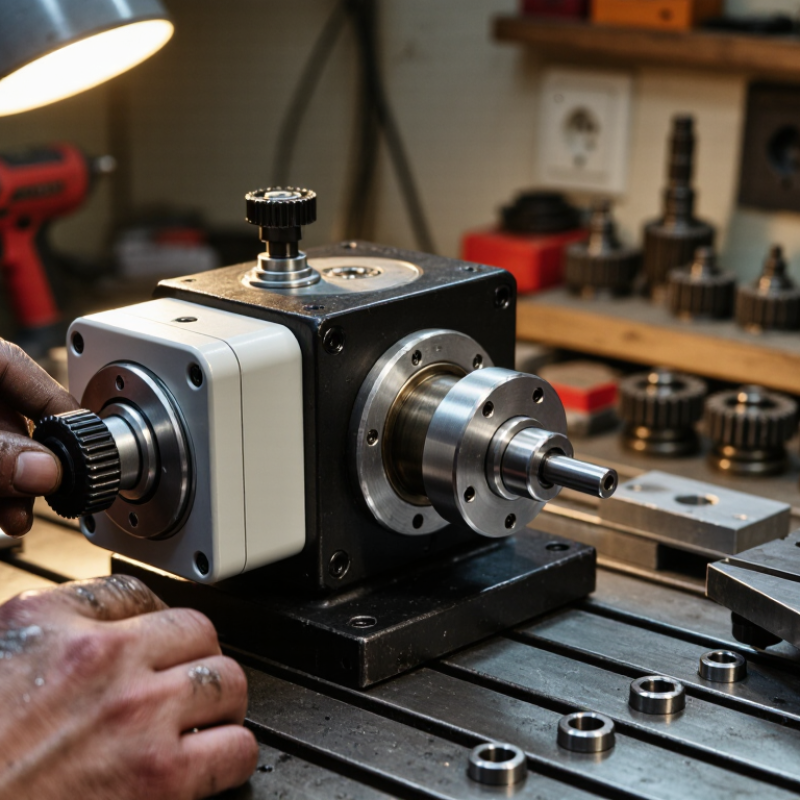
7 Mini Mill Power Feed Tips for Global Buyers?

Define Mini Mill Power Feed Specs: 0.001–0.020 in/rev and 0.1–10 in/min

A mini mill power feed should be specified by two different measurements: feed per revolution and travel speed. The useful range is 0.001–0.020 in/rev, with a speed range of 0.1–10 in/min. Feed per revolution describes cutter movement during each spindle turn. Travel speed describes table movement over time. Do not treat them as identical.

Tip 1: Check the machine’s table load before selecting a motor. Tip 2: Match the drive to the leadscrew pitch and diameter. Tip 3: Confirm whether the stated speed is unloaded or cutting speed. A practical calculation helps: at 1,000 rpm, 0.001 in/rev equals 1 in/min. At 0.020 in/rev, it reaches 20 in/min, which may exceed the controller’s limit. This mismatch needs attention.

Tip 4: Require adjustable low-speed control near 0.1 in/min for delicate cuts. Tip 5: Test backlash before judging feed accuracy. Tip 6: Check limit switches, manual override, and emergency stopping access. Tip 7: Ask for test data under load, not only catalog figures. In real workshops, vibration, lubrication, and cutter sharpness change results. The first setting may be wrong. A short aluminum trial cut can expose uneven motion, stalling, or excessive heat before harder materials are attempted.

7 Mini Mill Power Feed Tips for Global Buyers

Define the power-feed specification before comparing machines: feed per revolution is shown from 0.001 to 0.020 in/rev, while linear feed speed spans 0.1 to 10 in/min. The chart uses representative settings within these stated ranges.

  1. Confirm whether the control is specified in inches per revolution, inches per minute, or both.
  2. Check that the minimum feed of 0.001 in/rev supports finishing and light cutting.
  3. Verify the maximum feed of 0.020 in/rev for roughing applications.
  4. Compare the linear-speed range from 0.1 to 10 in/min.
  5. Ask whether feed speed remains stable under load.
  6. Confirm compatibility with the mill table, lead screw, voltage, and mounting arrangement.
  7. Evaluate speed adjustment, emergency stop access, installation, and replacement-part availability.

The plotted points are representative values distributed across the defined specification range. Actual cutting performance depends on cutter diameter, material, depth of cut, spindle speed, and machine rigidity.

Match Motor Torque to Table Load and 0.050–0.100 in Lead-Screw Pitch

A mini mill power feed should be sized around real table resistance, not motor wattage alone. The 0.050–0.100 inch lead-screw pitch changes the torque requirement significantly. Torque can be estimated as T = F × p ÷ (2π × efficiency), where F is table load and p is pitch. A 100-pound cutting resistance needs roughly 0.11–0.22 lb-in before friction and starting losses. Actual resistance may be higher.

The International Energy Agency reports that electric motor systems consume about 40% of global electricity. The U.S. Department of Energy also identifies poor motor sizing as a common source of wasted energy and overheating. These reports concern industrial systems, not mini mills, but their lesson remains useful: efficiency and duty cycle matter. A small motor with suitable torque can outperform a larger motor that stalls during acceleration.

Tip 1: Measure handwheel force with a spring scale. Convert that force into table resistance.

Tip 2: For a 0.100-inch pitch, choose more torque margin than for a 0.050-inch pitch. Start with 30% extra capacity.

Tip 3: Test the feed at low speed, then under a realistic cut. Watch for heat, vibration, and uneven travel.

The calculation is imperfect. Lubrication, gib adjustment, cutter diameter, and table position all change the result. I would avoid relying only on catalog torque, because rated torque may describe continuous operation, not startup load. A practical setup should also include adjustable speed and overload protection.

Verify Global Power Options: 110/220 V, 50/60 Hz, and Motor Phase

7 Mini Mill Power Feed Tips for Global Buyers

Verify Global Power Options: 110/220 V, 50/60 Hz, and Motor Phase

Global buyers should treat power compatibility as a specification, not a checkout detail. A mini mill power feed may accept 110 or 220 V, but the required input must be confirmed. Read the motor nameplate, wiring diagram, and supplier test sheet together. Do not rely on a marketplace listing alone. I have seen identical-looking units arrive with different factory settings. The error is easy to miss.

Check frequency as well. A 50 Hz supply can affect motor speed, heat, and control timing when equipment is designed for 60 Hz. Some units support both frequencies, while others need a suitable converter or replacement motor. Confirm whether the motor is single-phase or three-phase. A three-phase model will not run correctly from a standard household outlet without matched equipment. Ask for rated current at each voltage, plug configuration, and fuse or breaker guidance. Keep the answer in writing.

Before installation, compare the measured site voltage with the feed’s rating. Voltage can sag when a compressor starts nearby. Use a qualified electrician for wiring, grounding, and phase checks. Test the feed at low speed first, then under cutting load, watching for vibration, unusual noise, or rising heat. I sometimes wish I had recorded the no-load current; it makes later troubleshooting easier. Leave room for uncertainty, especially with older workshops and unstable grids. A small label beside the switch can prevent a costly mistake: voltage, frequency, phase, and rotation direction.

Check Compatibility with R8, MT2, and 3/4–1 in Lead-Screw Sizes

7 Mini Mill Power Feed Tips for Global Buyers

Check Compatibility with R8, MT2, and 3/4–1 in Lead-Screw Sizes

A mini mill power feed must match the machine, not just the advertised model. R8 and MT2 describe spindle tapers, while the lead screw controls table movement. These specifications are different. I once assumed an R8 spindle meant a standard feed fit. That assumption was wrong. Measure the table screw diameter, pitch, keyway, and available mounting space before ordering.

Tip 1: Confirm whether your lead screw measures 3/4 inch, 7/8 inch, or 1 inch. Tip 2: Check the thread pitch, because equal diameters can still use different threads. Tip 3: Inspect the shaft end. A missing keyway or unusual shoulder may require a custom adapter. Small details matter.

Tip 4: Compare the power feed’s torque and travel speed with your cutting work. Heavy cuts need steady torque, while delicate slotting needs smooth low-speed control. Tip 5: Verify clearance around the handwheel, table, and limit switches. Tip 6: Ask for a dimension drawing, not only a product photograph. Tip 7: Confirm the motor voltage and control input for your workshop. R8 or MT2 compatibility alone proves little. Some measurements may be inconvenient, but guessing can create backlash, vibration, or an unusable installation.

Confirm Safety and Quality: IEC 60529 IP54 and CE Certification

7 Mini Mill Power Feed Tips for Global Buyers

Confirm Safety and Quality: IEC 60529 IP54 and CE Certification

A mini mill power feed works near chips, coolant mist, and oily hands. IEC 60529 IP54 helps buyers assess enclosure protection. The first digit, 5, means dust ingress is limited, not completely prevented. The second digit, 4, covers splashing water from all directions. That matters beside an exposed cutting area. It does not permit hose cleaning.

Check the test report, not only the printed rating. Ask whether IP54 applies to the complete power-feed assembly. Cable glands, switches, and access covers can weaken protection. In my equipment inspections, loose covers often create more risk than the motor housing. A small gap matters. The rating may also depend on correct installation.

CE marking requires conformity with applicable European Union requirements. It is not a premium-quality certificate or a guarantee of machine performance. The European Commission’s Blue Guide explains that manufacturers must prepare technical documentation and declarations of conformity. Buyers should request both. The U.S. Bureau of Labor Statistics recorded about 2.6 million nonfatal private-industry workplace injuries and illnesses in 2023. That figure is not specific to milling, but it shows why guarding, emergency stopping, and electrical protection deserve practical checks. I would also verify voltage, overload protection, grounding, and thermal behavior under continuous feed. One uncomfortable question remains: was the IP54 test performed before or after assembly changes?

7 Mini Mill Power Feed Tips for Global Buyers? - Confirm Safety and Quality: IEC 60529 IP54 and CE Certification

Tip Buyer Checkpoint Practical Requirement Evidence to Request Why It Matters Risk Level
1 Verify the IP54 enclosure claim Under IEC 60529, IP5X means protection against harmful dust deposits, while IPX4 means protection against water splashing from all directions. It is not dust-tight or suitable for water jets. An enclosure rating statement, test report, or technical file identifying the tested enclosure and configuration. The rating applies to the specified enclosure arrangement, cable entries, covers, and operating conditions—not automatically to every installation. High
2 Confirm the correct electrical specification Match rated voltage, frequency, phase, motor current, connector type, and control voltage with the destination country and the mini mill. A nameplate photo, wiring diagram, user manual, and declared operating limits. Incorrect voltage or frequency can cause overheating, poor feed performance, nuisance trips, or premature motor failure. High
3 Check CE marking and conformity documents CE marking is a manufacturer’s declaration that the product meets applicable EU requirements. It is not a universal quality mark or automatically a third-party certificate. EU Declaration of Conformity, applicable legislation and standards, product identification, and technical documentation summary. Documents should correspond to the exact model, electrical version, and accessories being supplied. High
4 Evaluate overload and stall protection The feed should have a clearly defined overload response, such as current limiting, a protective fuse or breaker, and a safe stop or reset method. Protection specifications, reset instructions, rated duty information, and functional test results. Protection reduces the chance of motor damage, uncontrolled motion, wiring failure, and workpiece or tooling damage. Medium
5 Inspect controls and emergency stopping Confirm clearly labeled direction controls, speed adjustment, start/stop operation, and compatibility with the milling machine’s existing safety functions. Control layout, operating instructions, emergency-stop information, and a documented functional inspection procedure. The power feed must not create unexpected movement or prevent the operator from stopping the machine safely. High
6 Check mechanical compatibility and accuracy Verify mounting dimensions, shaft or gear interface, travel direction, feed-rate range, backlash, and available torque for the intended table load. Dimensioned drawings, interface tolerances, test data, and a compatibility checklist for the target mini mill. A mechanically mismatched feed can cause binding, inaccurate positioning, excessive wear, or damage to the table and transmission. Medium
7 Review installation, maintenance, and shipment quality Require grounding instructions, lubrication and inspection intervals, spare-part details, protective packaging, and a documented pre-shipment test. Installation manual, maintenance schedule, inspection checklist, packing specification, and serial or batch traceability. Clear after-sales information helps preserve IP protection, reduce downtime, and identify defects or transit damage quickly. Medium
Buyer note: IEC 60529 IP54 describes enclosure protection only. CE compliance should be assessed against the applicable European Union requirements for the complete product configuration and intended use.