
Skip to Content
chevron-left chevron-right chevron-up chevron-right chevron-left arrow-back star phone quote checkbox-checked search wrench info shield play connection mobile coin-dollar spoon-knife ticket pushpin location gift fire feed bubbles home heart calendar price-tag credit-card clock envelop facebook instagram twitter youtube pinterest yelp google reddit linkedin envelope bbb pinterest homeadvisor angies

10 Circuit Breaker Box Buying Tips for Global Buyers?

Global buyers need more than a low quotation when selecting a Circuit Breakers Box. The enclosure protects people, equipment, and business continuity in homes, factories, and commercial buildings. Yet product pages often hide important details.

A strong buying decision begins with clear application data. Consider voltage, current, fault level, circuit count, installation method, and ambient temperature. A dusty workshop may need stronger ingress protection than a clean office. Coastal sites can also challenge metal enclosures through salt exposure. Small details matter. Busbar spacing, terminal capacity, labeling space, and door clearance affect installation quality. Buyers should request drawings, test reports, material specifications, and traceable manufacturer information. Certification must match the destination market and the intended installation. IEC, UL, or other marks should never be accepted without checking their scope. Local electrical professionals should confirm compatibility with national requirements. This step can prevent expensive rework.

Price still matters, but total cost matters more. Compare breaker quality, enclosure durability, logistics, warranty terms, spare parts, and technical support. A cheap box may become costly after damaged terminals or missing documentation appear. Global shipping adds risks, including moisture, impact, customs delays, and unclear responsibilities. Ask how units are packed. Ask who handles defects. Do not assume every supplier provides the same after-sales service. A practical checklist helps, although it cannot replace engineering judgment. These ten buying tips examine selection, verification, safety, delivery, and long-term reliability. They also acknowledge an uncomfortable truth: even careful buyers can overlook one critical detail. Review the decision twice. Then ask a qualified installer to challenge it.
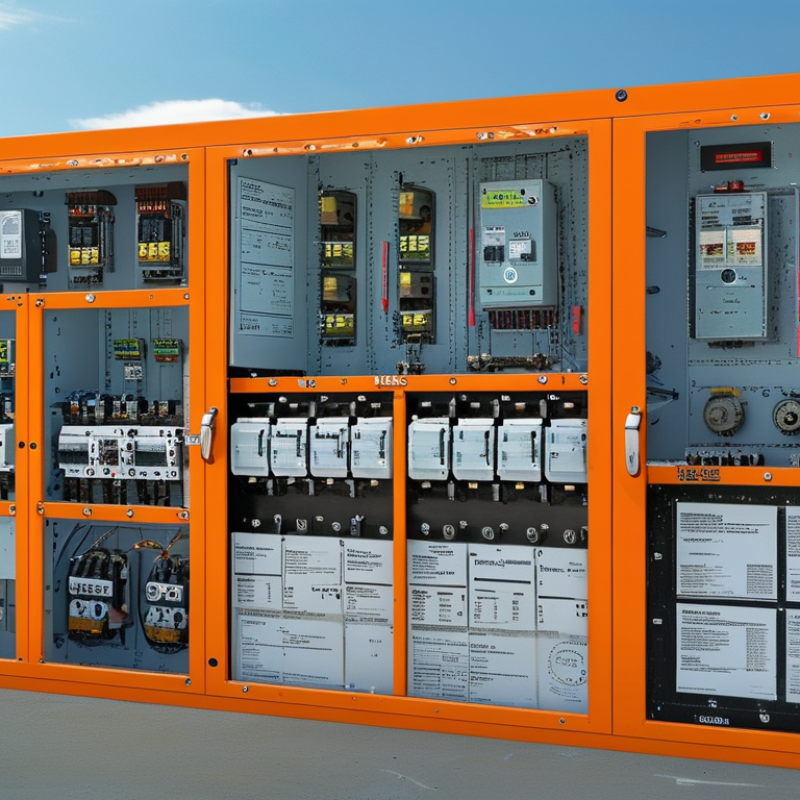
10 Circuit Breaker Box Buying Tips for Global Buyers?

Define Your Electrical Load and Circuit Breaker Requirements

Before buying a circuit breaker box, define the electrical load in real operating conditions. List every circuit, including lighting, sockets, motors, heaters, pumps, and future equipment. Record each device’s voltage, wattage, phase, and expected running time. A small workshop may look simple, but a motor can draw several times its normal current during startup.

Create a load schedule rather than guessing from the main breaker size. Add continuous loads carefully, then apply the demand factors required by the applicable local electrical standard. Check whether the supply is single-phase or three-phase. Confirm the available fault current, conductor size, enclosure environment, and required number of poles. Wet, dusty, or outdoor locations may need a higher protection rating.

Do not select breakers only by current rating. Their interrupting capacity must match the installation. Tripping characteristics also matter, especially for compressors and other equipment with high inrush current. A qualified electrician should verify coordination between the main breaker and branch breakers. Local approval requirements can differ between markets.

A spreadsheet helps, but it can miss reality. A rarely used machine may still overload a shared circuit when several tools start together. Leave practical space for spare circuits, though oversized boxes can waste money and wall space. My checklist is not perfect; actual measurements and professional review remain more reliable than assumptions.

10 Circuit Breaker Box Buying Tips for Global Buyers? - Define Your Electrical Load and Circuit Breaker Requirements

No. Buying Tip Required Data Load and Breaker Evaluation Illustrative Example Buyer Checkpoint
1 Confirm the nominal system voltage Country or project voltage, phase arrangement, frequency, and earthing system. Breaker voltage rating must be equal to or higher than the system voltage. Common low-voltage systems include 120/240 V single-phase and 230/400 V three-phase. A 230/400 V, three-phase installation generally uses 230 V line-to-neutral and approximately 400 V line-to-line. Verify the local electrical code and utility supply before selecting the enclosure and breakers.
2 Create a complete circuit schedule Loads such as lighting, sockets, HVAC, water heating, pumps, ovens, and machinery. Record each circuit's load type, rated power, operating voltage, phase, and quantity instead of estimating from the number of rooms. Separate lighting, general-purpose outlets, kitchen equipment, and motor loads into clearly identified circuits. Ask for a circuit directory and permanent labels inside the box.
3 Calculate current from power Rated power in watts or kilowatts and the applicable voltage. For single-phase loads, use I = P ÷ (V × power factor). For three-phase loads, use I = P ÷ (√3 × V × power factor). A 2,300 W resistive load at 230 V draws approximately 10 A before applying code-required design margins. Use the equipment nameplate rating and do not size a breaker from wattage alone.
4 Apply continuous-load requirements Expected operating time and the applicable definition of a continuous load. Many electrical codes require continuous loads to be included at 125% of their expected current. The exact rule depends on the jurisdiction. A 12 A load treated as continuous may be evaluated at 15 A for design purposes where the 125% rule applies. Confirm the requirement with a qualified electrician or the authority having jurisdiction.
5 Account for starting and inrush current Motor, compressor, transformer, LED driver, and power-supply starting characteristics. Short-duration inrush may require an appropriate trip curve, but the breaker must still protect the conductors and equipment. A pump may have a substantially higher starting current than its running current; use the manufacturer's data for selection. Do not simply install a larger breaker to stop nuisance tripping.
6 Match the breaker to conductor ampacity Conductor material, cross-sectional area, insulation temperature rating, installation method, ambient temperature, and grouping. The protective device rating must not exceed the allowable conductor ampacity unless a specific code exception applies. A circuit using a conductor permitted for 16 A protection should not be fitted with a 25 A breaker merely because the load occasionally rises. Have cable sizing and breaker coordination checked together, not separately.
7 Check short-circuit interrupting capacity Prospective short-circuit current at the installation point. The breaker's interrupting rating must be equal to or greater than the available fault current at its location. If the calculated prospective fault current is 6 kA, a device rated below 6 kA is unsuitable for that position. Request the required short-circuit rating, such as 6 kA or 10 kA, from the project designer or utility data.
8 Select the correct number of poles Single-phase or three-phase supply, neutral switching requirements, and local code. One-pole, two-pole, three-pole, or four-pole configurations must match the circuit conductors and isolation requirements. A three-phase load may require a mechanically linked three-pole protective device so all phases disconnect together. Confirm whether the neutral must be switched and whether shared-neutral circuits require linked poles.
9 Choose protection functions by risk Shock risk, wet areas, outdoor circuits, surge exposure, sensitive electronics, and fire-safety requirements. Depending on the design, the box may need residual-current protection, overcurrent protection, surge protection, or arc-fault protection. Outdoor socket circuits may require additional residual-current protection according to local regulations. Specify trip sensitivity, test requirements, coordination, and the required protection standard before ordering.
10 Allow capacity for future expansion Expected additional circuits, spare ways, enclosure dimensions, busbar capacity, and service rating. Reserve physical spaces and electrical capacity for future loads without exceeding the main service or busbar rating. A panel with 24 usable ways may reserve 4 to 6 ways for future circuits, subject to the project design. Confirm enclosure rating, ingress protection, heat dissipation, spare terminals, and maximum allowable circuit count.

Important: The numerical examples are for preliminary planning only. Final circuit-breaker ratings, cable sizes, fault ratings, enclosure specifications, and protection functions must be verified against the electrical code and certification requirements of the installation country by a qualified professional.

Compare Box Types, Materials, Sizes, and Internal Configurations

10 Circuit Breaker Box Buying Tips for Global Buyers

Choosing a circuit breaker box starts with its internal purpose, not its appearance.

A main distribution box suits centralized control, while a sub-box works better for separate floors or workshops. Weather-resistant boxes protect outdoor circuits, but they may need careful cable sealing.

My early purchasing mistake was treating all enclosures as interchangeable. They are not.

Material affects durability, heat control, and installation weight. Powder-coated steel offers strong impact resistance and stable mounting. Polycarbonate or similar engineered plastic resists corrosion and reduces weight.

For humid or coastal locations, inspect the enclosure rating, gasket quality, and drainage design. A strong shell cannot fix poor cable entry points.

Size must allow current devices, neutral bars, grounding bars, and future circuits. A crowded box makes inspection difficult and can restrict safe wire bending.

An oversized box costs more and may waste wall space. I still recheck this balance on every project.

Internal configuration matters just as much. Compare single-row and multi-row layouts, removable mounting plates, busbar positions, and clear labeling space.

Confirm compatibility with the required breaker dimensions and terminal sizes. Check rated voltage and current carefully.

Local electrical rules and qualified inspection requirements also vary by market. Ask for test documentation, installation drawings, and material details before ordering.

Small documents often reveal large differences.

Check Voltage Ratings, Safety Standards, and Certification Marks

10 Circuit Breaker Box Buying Tips for Global Buyers

A breaker box must match the building’s electrical system, not just its appearance. Check the supply voltage, frequency, phase, and number of poles before comparing prices. A 230-volt system needs equipment rated for that environment. Never assume a similar-looking panel will work safely. In practical inspections, I also compare the breaker’s rated current with the cable size and expected load. Small mismatches can create heat inside the enclosure.

Tips: Ask for the voltage rating, short-circuit breaking capacity, and temperature limits in writing. Confirm whether the enclosure suits indoor, outdoor, damp, or dusty locations. Check the wiring space carefully. Crowded terminals make installation slower and increase error risks. A useful detail is the label: it should remain readable after installation, even in a dark utility room.

Certification marks need careful review. Look for markings accepted in the destination market, then verify the related certificate or test report through an official database. IEC 60947-2 may support industrial breaker requirements, while local rules can demand additional approvals. A CE mark indicates conformity claims, but it is not always proof of independent product testing. This distinction is easy to miss. I have seen buyers trust a printed symbol without checking its scope, date, or product model. That shortcut deserves reconsideration. When documents conflict, pause the purchase and ask a qualified electrical professional or local authority.

10 Circuit Breaker Box Buying Tips for Global Buyers: Check Voltage Ratings, Safety Standards, and Certification Marks

The chart compares common nominal single-phase supply voltages in selected markets. Before purchasing a circuit breaker box, confirm the local system voltage, frequency, phase arrangement, rated current, short-circuit capacity, enclosure rating, terminal configuration, and compatibility with the applicable standards. Common references include IEC 61439 for low-voltage switchgear assemblies, IEC 60898-1 for household circuit-breakers, IEC 60947-2 for circuit-breakers used in broader industrial applications, and applicable national certification or conformity marks such as CE, UKCA, UL, or CSA.

Values shown are common nominal supply voltages; actual installations may vary by location and electrical system. Always verify requirements with local regulations and a qualified electrical professional.

Evaluate Installation Features, Compatibility, and Maintenance Access

When buying a circuit breaker box internationally, evaluate installation details before appearance or price. Check the system voltage, frequency, phase arrangement, pole count, and short-circuit rating. A box designed for 230 volts may not suit a 120/240-volt installation. Confirm cable sizes and terminal capacity, too. Small mismatches create expensive field changes.

Maintenance access matters every day. Select a box with clear working space, removable covers, visible circuit labels, and terminals that allow controlled torque tightening. The enclosure should match the site environment, using an appropriate IP rating under IEC 60529. For assemblies, ask for documented design verification aligned with IEC 61439-1. Breakers should also match the applicable requirements of IEC 60947-2 or the destination market’s recognized standard.

Safety data gives this choice real weight. The National Fire Protection Association reported an estimated 32,620 U.S. home fires involving electrical distribution and lighting equipment annually from 2015 to 2019. These fires caused about 470 civilian deaths, 1,100 injuries, and 1.3 billion dollars in property damage each year.

The box is not the only cause. Poor connections and overloaded circuits often expose weak installation decisions. I once saw a beautifully labeled panel with almost no room for safe retightening. It looked finished. It was not. Leave practical clearance, verify torque instructions, and request test records before shipment. A few minutes with a terminal schedule can prevent weeks of corrective work.

Assess Suppliers, Pricing, Shipping, Warranty, and After-Sales Support

Global buyers should assess a circuit breaker box supplier beyond a polished catalog. Request factory photos, test records, material specifications, and recent export references. A serious supplier explains enclosure thickness, busbar material, thermal limits, and inspection steps. Ask who performs final testing. Vague answers deserve caution. Video audits help, but they are not a substitute for independent verification.

Compare pricing line by line, not by total quotation alone. Check whether breakers, terminals, labels, packaging, and spare parts are included. A low offer may hide thinner steel, weaker terminals, or costly tooling changes. Request currency, payment milestones, minimum order quantity, and validity period in writing. Shipping needs equal attention. Confirm carton dimensions, pallet rules, insurance responsibility, port charges, and delivery terms. A sample shipment can reveal crushed corners or loose internal parts before volume production. Yet samples can be unusually careful. That is a useful warning.

Warranty terms should state coverage, response times, exclusions, and replacement procedures. Ask how faults are diagnosed when a box is installed thousands of miles away. Reliable after-sales support includes wiring guidance, installation documents, spare-part access, and trained technical contacts. Test response quality before ordering: send a detailed technical question and measure the reply. Fast answers are not enough. The explanation must be accurate, practical, and consistent with the supplied documents. Keep inspection photos, serial records, and agreed specifications in one file. That discipline protects decisions when something goes wrong.