2026 Top Traffic Control Bollard Suppliers Guide
Urban streets are changing quickly. Delivery vans, cyclists, pedestrians, and autonomous systems now share tighter spaces. A Traffic Control Bollard can separate these movements, protect entrances, and clarify vehicle access. Yet appearance alone proves little.
The World Health Organization’s Global Status Report on Road Safety 2023 recorded about 1.19 million annual road deaths worldwide. Pedestrians and other vulnerable users remain heavily exposed. The U.S. National Highway Traffic Safety Administration reported 7,522 pedestrian deaths in 2022. These figures give bollard selection a human context. Dr. John J. Fruin, a respected pedestrian-planning expert, wrote, “The pedestrian is the most vulnerable road user.” His observation still matters beside a crowded curb.
This 2026 supplier guide examines manufacturers through tested performance, material quality, installation experience, and service reliability. It considers fixed, removable, retractable, flexible, and impact-rated designs. It also reviews ASTM F2656, IWA 14-1, PAS 68, visibility, drainage, corrosion resistance, and replacement access. Testing labels can confuse buyers. A product rated for vehicle impact may not suit routine traffic guidance. A decorative stainless-steel post may look strong, but its foundation could fail first. That detail is easy to miss.
Market research reports, including Grand View Research’s studies on smart infrastructure and access-control equipment, indicate continuing investment in automated urban protection systems. However, market growth does not guarantee better procurement. Supplier claims still require verification through test certificates, installation drawings, maintenance records, and independent references. This guide makes those checks visible, while admitting one limitation: regional standards, soil conditions, and operating habits can change the final choice. The best supplier is not always the largest. Sometimes, it is the one that answers difficult questions clearly.
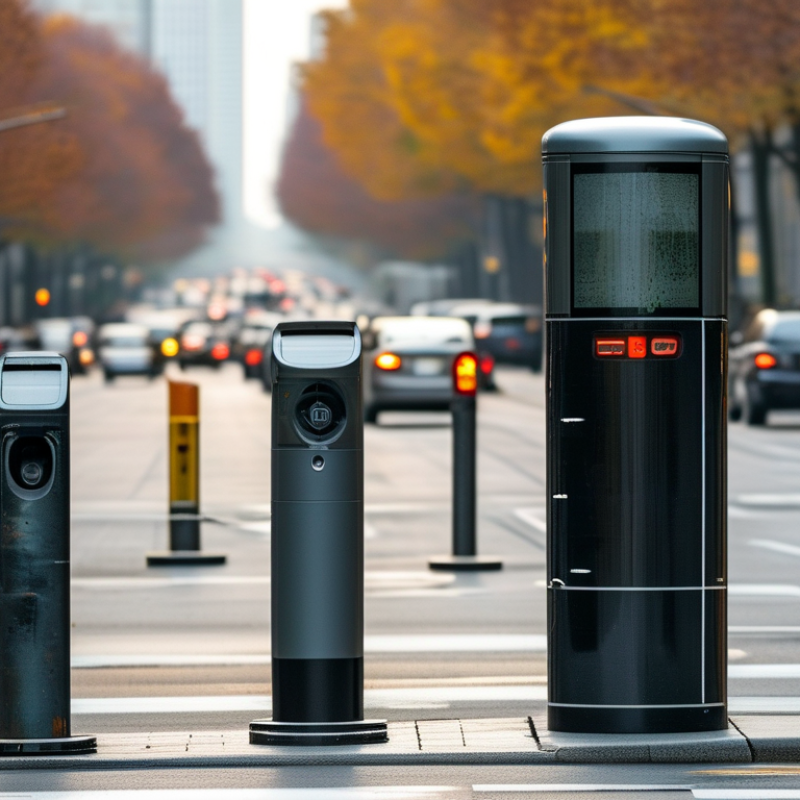
Traffic Control Bollards: Purpose, Types, and Key Applications
Traffic control bollards define safer movement between vehicles, pedestrians, and restricted zones. They guide drivers, protect corners, and reduce accidental vehicle access. The World Health Organization’s Global Status Report on Road Safety 2023 estimates 1.19 million annual road deaths worldwide. That figure reinforces a practical point: small safety details matter.
Common types include fixed steel bollards, flexible polyurethane models, removable units, and retractable systems. Fixed bollards suit building fronts and loading areas. Flexible versions absorb minor impacts and return upright. Removable bollards support temporary closures, while retractable units manage controlled access. Impact-rated designs require careful foundation planning, spacing, visibility, and maintenance. The FHWA’s 11th Edition of the Manual on Uniform Traffic Control Devices stresses consistent visibility and predictable traffic guidance. A bollard alone cannot correct poor lighting or confusing markings.
Tips: Match the bollard to vehicle risk, not appearance. Check diameter, anchoring, reflective bands, drainage, and replacement access. Ask suppliers for test evidence, installation drawings, and maintenance records. Field inspections often reveal loose anchors, faded reflectors, and blocked access paths. These details are easy to miss. Supplier comparisons should include lifecycle cost, delivery reliability, technical support, and documented compliance. Market rankings can be useful, but they may not reflect local site conditions or long-term performance.
How to Evaluate Traffic Control Bollard Suppliers in 2026
2026 Top Traffic Control Bollard Suppliers Guide
How to Evaluate Traffic Control Bollard Suppliers in 2026
Choosing a traffic control bollard supplier requires more than comparing catalog prices. Start with documented field experience. Ask how many comparable projects the supplier has completed, including loading bays, pedestrian routes, and exposed outdoor sites. Request installation photos, maintenance records, and two recent customer references. Real performance often appears after repeated vehicle contact, harsh weather, and daily cleaning.
Review technical evidence before accepting claims. A reliable supplier should provide material specifications, impact ratings, anchoring details, corrosion test results, and batch traceability. Check whether dimensions match your traffic lanes and pedestrian clearances. Ask for independent laboratory reports when safety performance is critical. Samples should be inspected for weld quality, reflective visibility, coating consistency, and base-plate alignment. Small defects matter.
Do not judge reliability from a polished website alone. Examine warranty conditions, replacement lead times, spare-part availability, and technical support after delivery. A supplier should explain limitations clearly, including unsuitable surfaces or installation mistakes. Site surveys and written drawings show practical expertise. Still, no evaluation is perfect. Test reports may not reflect your exact traffic pattern, and references can be selective. Record unanswered questions in the tender review, then request a supervised sample installation before placing a large order.
And measure it.
Materials, Safety Standards, and Customization Options
The 2026 traffic control bollard market demands more than attractive finishes. The World Health Organization’s Global Status Report on Road Safety 2023 records about 1.19 million annual road deaths worldwide. That figure makes material selection a safety decision, not only a purchasing decision. Stainless steel resists corrosion near saltwater. Galvanized steel usually offers stronger cost control. Ductile iron suits heritage streets, but it can be less forgiving after impact. Recycled polymers may work for pedestrian guidance, not hostile vehicle protection.
Ask suppliers for evidence, not confident wording. ASTM F2656 and ISO 22343-1 describe vehicle-impact testing methods and performance classification. A compliant-looking product is not automatically crash-rated. Request the tested vehicle mass, impact speed, foundation design, and installation drawings. The UK’s PAS 68 framework is also referenced in security projects, although project teams should confirm its current applicability. Small details matter. Poor anchoring can defeat strong steel.
Customization should follow site risks. Options include removable sleeves, reflective bands, solar lighting, chain connections, and contrasting colors for low-light visibility. The U.S. National Highway Traffic Safety Administration reported 7,522 pedestrian deaths in 2022, showing why visibility deserves serious attention. However, decorative lighting can create glare or maintenance problems. That trade-off is easy to miss. Experienced installers should review drainage, underground utilities, emergency access, and replacement procedures before fabrication. No specification is perfect. Recheck assumptions after a site walk.
2026 Top Traffic Control Bollard Suppliers Guide
ASTM F2656 Impact-Test Speed Reference
ASTM F2656 impact ratings are expressed by the test speed in miles per hour. M30, M40, and M50 represent bollard systems tested against vehicle impacts at 30, 40, and 50 mph respectively. When comparing suppliers, review the tested foundation design, vehicle class, penetration distance, material specification, corrosion protection, visibility features, and available customization options in addition to the rating.
Choosing the Right Bollard Supplier for Your Project Needs
Choosing a traffic control bollard supplier should begin with the site, not the catalogue. Measure vehicle paths, turning radii, pavement strength, drainage, lighting, and pedestrian movement. A supplier with field experience should ask for photographs and installation drawings before quoting.
Safety evidence matters. The NHTSA Traffic Safety Facts report recorded 7,314 pedestrian deaths in the United States in 2023. Bollards cannot solve every risk, but visibility, spacing, and impact performance deserve careful review. Ask whether products meet relevant requirements in the FHWA Manual on Uniform Traffic Control Devices, including conspicuity guidance. For vehicle-resistant systems, request independent test evidence against standards such as ASTM F3016/F3016M. Marketing language is not test data.
Check the supplier’s technical file. It should identify steel grade, coating thickness, foundation details, energy ratings, replacement parts, and inspection intervals. Ask who installs the system and how damaged units are replaced after an impact. I have seen low quotations become expensive when anchors, excavation, or traffic management were excluded. That mistake is easy to repeat. Request a complete, itemized proposal with delivery assumptions and warranty limits. A short site trial can reveal glare, poor access, or awkward spacing before full purchase. The cheapest option may still be appropriate, but only when its evidence matches the project’s actual hazards.