
2026 Best Wire Shielding Sleeve Types for Global Buyers?
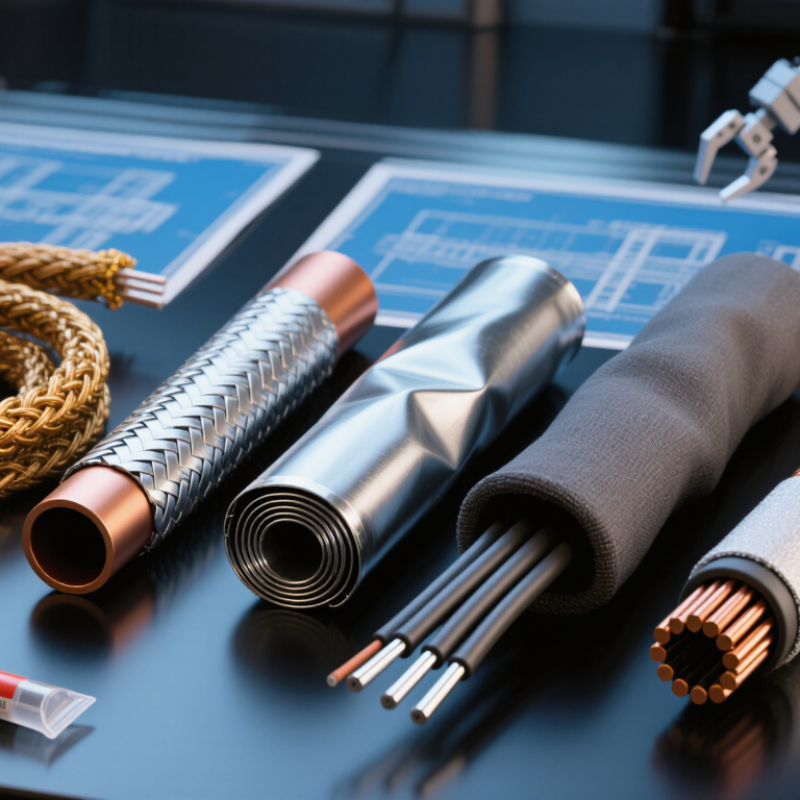
Global buyers face a crowded market when selecting the best Wire Shielding Sleeve for 2026. Braided copper, tinned copper, aluminum foil, conductive fabric, and hybrid sleeves serve different cable environments. Each option balances shielding performance, flexibility, weight, abrasion resistance, and installation time.
Henry W. Ott, a widely respected EMC engineering authority, stated, “Shielding is not a substitute for good circuit design.” His warning remains practical. A sleeve cannot repair poor grounding, excessive gaps, or badly terminated cable ends. Buyers should inspect the complete shielding path, not only the product datasheet.
Real projects reveal the difference. A braided copper sleeve may handle repeated bending near robotic joints. A foil sleeve can provide broad frequency coverage around compact harnesses. Conductive fabric may suit lightweight electronics, but it can suffer from edge wear. Hybrid sleeves often offer a useful compromise. Not always the cheapest.
This guide compares leading Wire Shielding Sleeve types for international purchasing teams. It considers attenuation, temperature range, fire behavior, chemical exposure, diameter tolerance, and termination methods. Supply stability also matters. A technically excellent sleeve becomes impractical when samples, certifications, or replacement stock arrive late.
Some details are easy to miss. Measure the installed diameter, not just the loose cable bundle. Check whether the sleeve needs a drain wire, clamp, or conductive adhesive. Confirm testing conditions before comparing decibel ratings. Marketing language can sound precise while hiding important limits.
The strongest choice depends on the application. There is no universal winner. Careful specification, supplier verification, and field testing remain essential for dependable 2026 sourcing.
Classify Sleeve Designs: Braided, Foil, Conductive Fabric, and Hybrid
2026 Best Wire Shielding Sleeve Types for Global Buyers?
Classify Sleeve Designs: Braided, Foil, Conductive Fabric, and Hybrid
Braided sleeves remain practical for moving cable bundles. Their open structure supports bending, airflow, and visual inspection. Copper or tinned-copper strands can provide low-resistance grounding paths. However, coverage depends on braid angle and expansion. A loose braid may expose gaps near connectors. That detail is often missed during purchasing.
Foil sleeves offer near-continuous shielding around sensitive wires. They are effective against high-frequency electromagnetic interference when the foil overlaps correctly. Installation needs careful drain-wire contact and strong termination control. Conductive fabric sleeves feel softer and fit irregular harnesses more easily. Their performance can vary after abrasion, compression, or repeated bending. They are comfortable to install, but not automatically durable.
Hybrid sleeves combine braided coverage with foil or conductive fabric layers. This design can balance mechanical protection, flexibility, and broader frequency performance. MarketsandMarkets reported that the electromagnetic shielding market could grow from about USD 6.2 billion in 2023 to USD 8.4 billion by 2028. Grand View Research also identifies rising electronics density as a major demand factor. These figures support stronger screening, but they do not replace application testing. Buyers should request shielding-effectiveness data, bend-cycle results, temperature ratings, and termination instructions. A sleeve that performs well in a laboratory may disappoint inside a vibrating vehicle harness. Not every specification is equally useful. Testing the complete assembly is the safer decision.
Compare Copper and Tinned-Copper Braid by Coverage, Conductivity, and Weight
2026 Best Wire Shielding Sleeve Types for Global Buyers?
Copper and tinned-copper braids differ less in bulk conductivity than many buyers expect. The Copper Development Association lists annealed copper at 100% IACS conductivity, measured at 20°C. IEC 60228 uses comparable resistance principles for copper conductors. A tin coating mainly improves corrosion resistance and solderability. It does not create a stronger electromagnetic barrier by itself.
Coverage depends on braid angle, carrier count, and expansion. A dense braid may provide about 85–95% optical coverage in common cable assemblies, but suppliers should confirm the tested value. IEC 62153-4-4 evaluates transfer impedance, which is more meaningful than coverage alone. More coverage usually improves shielding continuity. It can also reduce flexibility. Small gaps matter around connectors.
Weight is often the practical deciding factor. Copper density is approximately 8.96 g/cm³, according to standard materials data. Tin is denser, near 7.3 g/cm³, but the coating is thin. Therefore, tinned-copper braid usually weighs close to bare copper braid at the same construction. Bare copper remains attractive for short indoor runs. Tinned copper suits humid, coastal, or chemically active environments. Test it.
One weakness remains. Published coverage figures may use different expansion conditions, making direct comparisons unreliable. Buyers should request resistance, transfer impedance, coverage method, and mass per metre in the same quotation.
| Shielding Sleeve Type | Typical Optical Coverage | Electrical Conductivity | Approximate Resistivity | Relative Weight | Corrosion and Environment | Best-Fit Applications | Main Buying Consideration |
|---|---|---|---|---|---|---|---|
| Bare Copper Braid Standard Coverage | 85–90% | About 100% IACS for annealed copper; excellent low-frequency grounding performance | Approximately 0.0172 Ω·mm²/m at 20°C | Reference weight: 100% | Suitable for dry indoor environments; exposed copper can oxidize in humid, salty, or chemically aggressive conditions | Control cables, grounding jumpers, laboratory wiring, and general electromagnetic shielding | Choose when maximum conductivity and economical material cost are more important than long-term surface protection |
| Bare Copper Braid High Coverage | 90–95% | About 100% IACS for the copper conductor; higher coverage improves shielding continuity | Approximately 0.0172 Ω·mm²/m at 20°C | Approximately 105–125% of standard-coverage braid with the same nominal sleeve diameter | Good in controlled environments; copper oxidation may increase contact resistance over time | High-performance signal cables, instrumentation, audio, data, and sensitive electronic assemblies | Higher coverage generally increases material usage, radial stiffness, and cost |
| Tinned-Copper Braid Standard Coverage | 85–90% | Typically about 97–100% IACS for the finished conductor, depending on copper grade, tin thickness, and braid construction | Typically about 0.0172–0.0177 Ω·mm²/m at 20°C | Approximately 102–108% of equivalent bare-copper braid | Improved resistance to oxidation, humidity, salt mist, and soldering-related handling; not automatically suitable for every chemical exposure | Automotive harnesses, marine equipment, industrial controls, outdoor cable assemblies, and power electronics | Often the best balance between conductivity, environmental durability, and termination reliability |
| Tinned-Copper Braid High Coverage | 90–95% | Typically about 97–100% IACS for the finished conductor; shielding continuity benefits from the denser braid | Typically about 0.0172–0.0177 Ω·mm²/m at 20°C | Approximately 107–130% of standard bare-copper braid with the same nominal sleeve diameter | Best surface protection among the listed options; verify compatibility with strong acids, alkalis, and high-temperature chemicals | Marine and outdoor systems, high-reliability equipment, inverter cables, robotics, and demanding industrial installations | Provides strong environmental resistance and coverage, but normally has the highest material cost and weight |
| Fine-Strand Copper Braid Flexible Construction | 85–95% | About 100% IACS for bare copper; effective resistance depends on total metal cross-sectional area and braid length | Approximately 0.0172 Ω·mm²/m for the copper material at 20°C | Usually 95–120% of a conventional braid designed for the same current rating | Bare or tinned versions are available; tinned fine strands generally provide better oxidation resistance | Repeated-flex cable assemblies, robotics, moving machinery, battery connections, and vibration-prone equipment | Prioritize bend radius, flex-life testing, and termination design rather than coverage alone |
| Selection note: Optical coverage describes the percentage of the sleeve surface covered by braid strands and is influenced by braid angle, carrier count, pick count, and sleeve expansion. Conductivity values are referenced at approximately 20°C; resistance rises as temperature increases. Weight comparisons are indicative because actual mass depends on sleeve diameter, braid construction, metal cross-sectional area, and tin coating thickness. | |||||||
Measure Shielding Effectiveness (dB) and Transfer Impedance (mΩ/m) by Frequency
2026 Best Wire Shielding Sleeve Types for Global Buyers?
Measure Shielding Effectiveness (dB) and Transfer Impedance (mΩ/m) by Frequency
Global buyers should compare braided, foil-braided, spiral, and conductive textile sleeves by frequency. Shielding effectiveness shows how much interference is reduced. Transfer impedance shows how easily external current couples through the shield. Lower is better.
Do not trust one impressive dB number. IEC 62153-4-3 test methods require controlled fixtures, cable termination, and frequency sweeps. Industry test reports commonly show braided copper sleeves reaching roughly 60–90 dB from 10 MHz to 1 GHz. Foil-braided designs can exceed 90 dB at higher frequencies, when seams remain tightly closed. Textile sleeves often provide lower attenuation, commonly around 30–60 dB, but they bend easily and support faster installation.
Frequency changes everything. A sleeve may show 75 dB at 100 MHz, yet perform poorly near 1 GHz because openings become electrically significant. Published EMC engineering data also report transfer impedance values below 10 mΩ/m for well-constructed metallic shields in lower-frequency ranges. At imperfect overlaps, results can rise sharply. That detail is easy to miss.
For a 5 MHz motor cable, prioritize low transfer impedance and continuous grounding. For a 500 MHz data cable, inspect aperture size, braid coverage, and connector bonding. Ask for raw sweep data, not a single maximum value. Test conditions differ. Even experienced engineers sometimes compare unlike fixtures, which makes the purchasing decision weaker.
2026 Best Wire Shielding Sleeve Types for Global Buyers
Shielding effectiveness (dB) and transfer impedance (mΩ/m) across frequency for common sleeve constructions.
Values are representative engineering reference data for comparative design screening. Actual performance varies with coverage, braid angle, termination quality, cable geometry, and measurement method.
Verify UL 1441, IEC 60512, IEC 60695, RoHS, and REACH Compliance
For global buyers, wire shielding sleeves should be verified against application-specific evidence, not catalog claims. UL 1441 addresses coated electrical sleeving, including insulation performance and construction controls. It does not automatically prove suitability for every voltage or temperature. Request the certificate scope, material construction, wall thickness, and applicable ratings.
IEC 60512 provides test methods for electrical connectors and assemblies. A sleeve may support connector reliability, but IEC 60512 is not a universal sleeve certification. Check relevant tests for contact resistance, vibration, tensile strain, and environmental conditioning. IEC 60695 focuses on fire-hazard testing. Flame response, glow-wire behavior, and ignition resistance should match the installation risk. A sleeve that passes one fire test may still fail another.
Chemical compliance requires separate evidence. RoHS documentation should identify restricted substances and support test results, while REACH records should address SVHC declarations and supply-chain updates. A 2024 global wire-and-cable market report estimated the sector above USD 200 billion, with continued growth driven by electrification and data infrastructure. That scale increases counterfeit-document risk. Ask for laboratory reports, batch traceability, and current declarations. Do not accept an undated PDF. I would also verify sample identity against production reels. This step is often missed. IEC documents define methods, not automatic approval, and buyers sometimes treat them as interchangeable. That assumption needs correction.
Specify Diameter, Expansion Ratio, Bend Radius, Temperature, and MOQ
2026 Best Wire Shielding Sleeve Types for Global Buyers?
Global buyers should match sleeve type to the cable’s real working conditions. Expandable PET braided sleeves suit general wire bundles and offer flexible routing. Split braided sleeves help during repairs because installers can wrap them around existing cables. Fiberglass sleeves with a silicone coating handle higher heat. PTFE-based sleeves resist chemicals, but they usually cost more and expand less.
Specify the diameter carefully. Measure the largest bundle point, including connectors, then compare it with the sleeve’s expanded range. A 10 mm bundle may need a sleeve rated from 8 to 16 mm. Check the expansion ratio, not only the nominal size. Too little expansion causes installation delays. Too much expansion can reduce coverage and allow movement.
Bend radius matters.
Confirm the minimum bend radius after installation, not only during testing. Ask for continuous and intermittent temperature ratings, because engine spaces and control cabinets behave differently. Also request flame, abrasion, and chemical test data when the application demands it. MOQ can change the real purchase cost. A low unit price may become inefficient if the minimum order exceeds annual usage. In my experience, buyers often overlook packaging length and cut tolerance. That mistake creates waste. I still recommend testing a small sample under heat, bending, and pull conditions before approving volume production.